TEEKANNU
Classic Slip Casting Meets 3D Printing
Individual Project | 8 weeks





What is TEEKANNU?
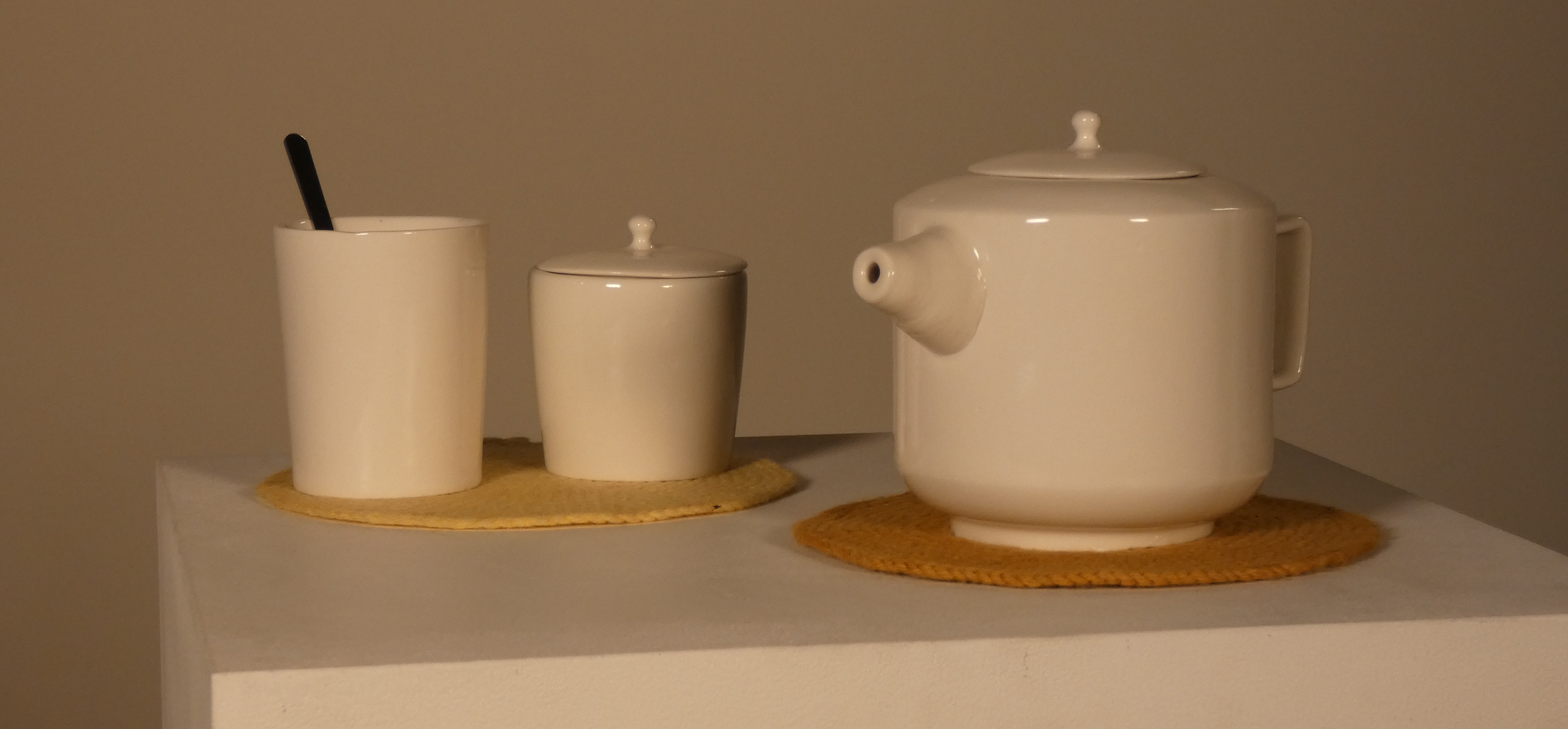
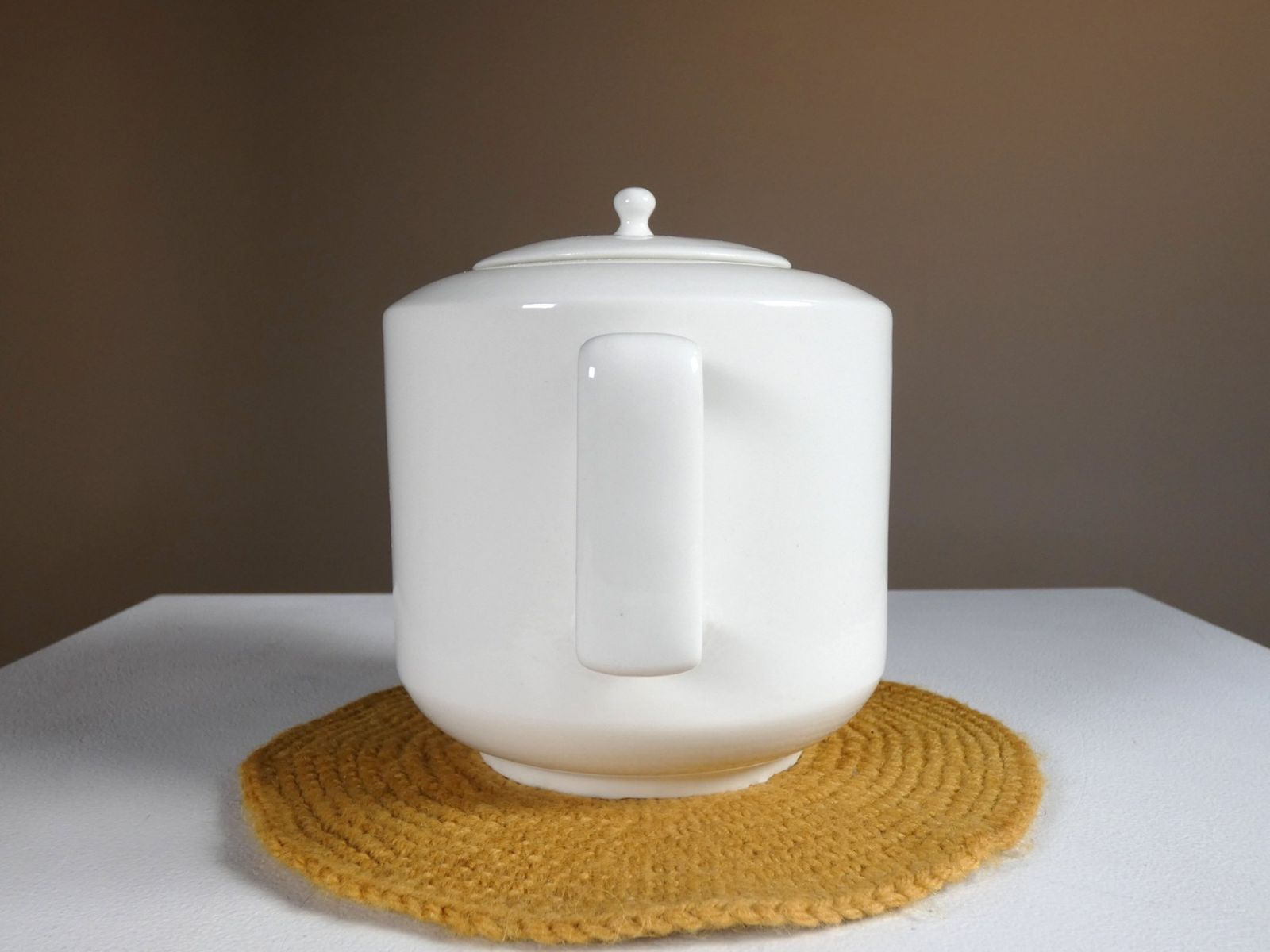
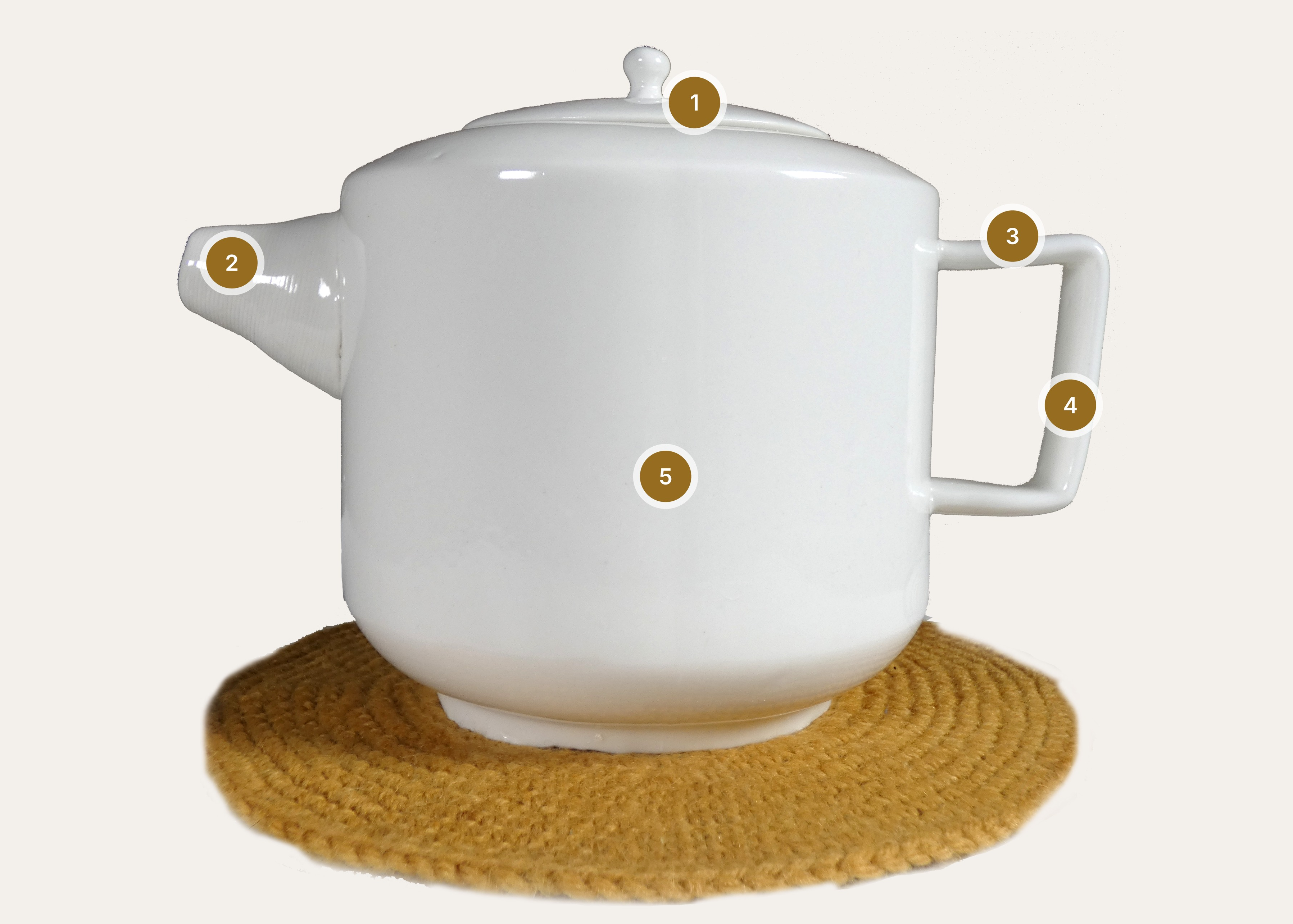
TEEKANNU, Finnish for teapot, is a slip cast porcelain tea set made up of a 750 ml teapot and matching mugs. Each part of the teapot borrows a detail from a different tea loving nation, so the Teapot reads as one calm form while carrying many cultures within it.
The set was produced by hand, combining classical mould making with modern tools such as 3D printing, waterjet cutting and ceramic 3D printing.
One Pot, Many Tea Cultures
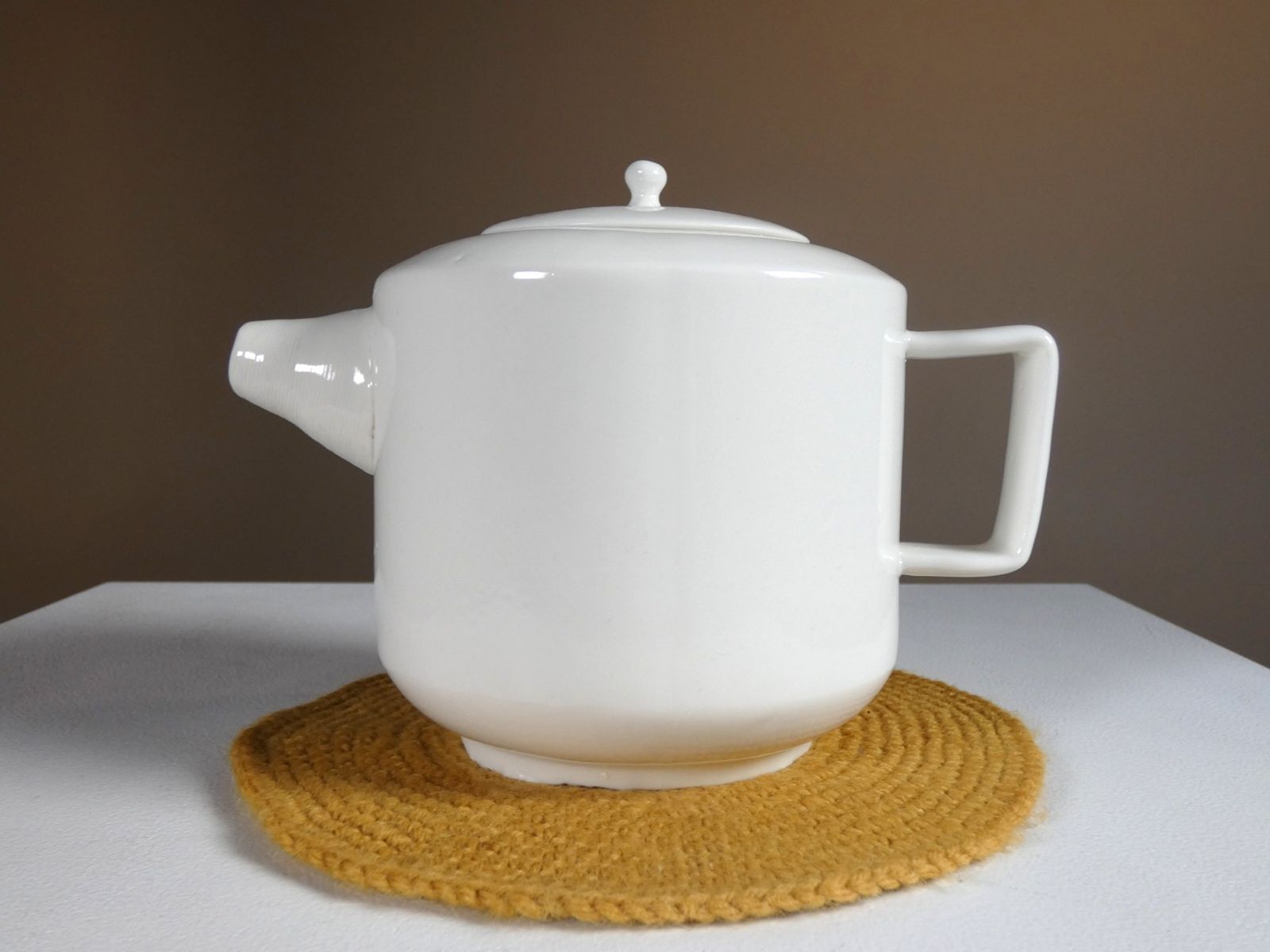
1. Lid - China
A shallow domed lid with a small knob, drawn from Chinese teaware, where the teapot began.
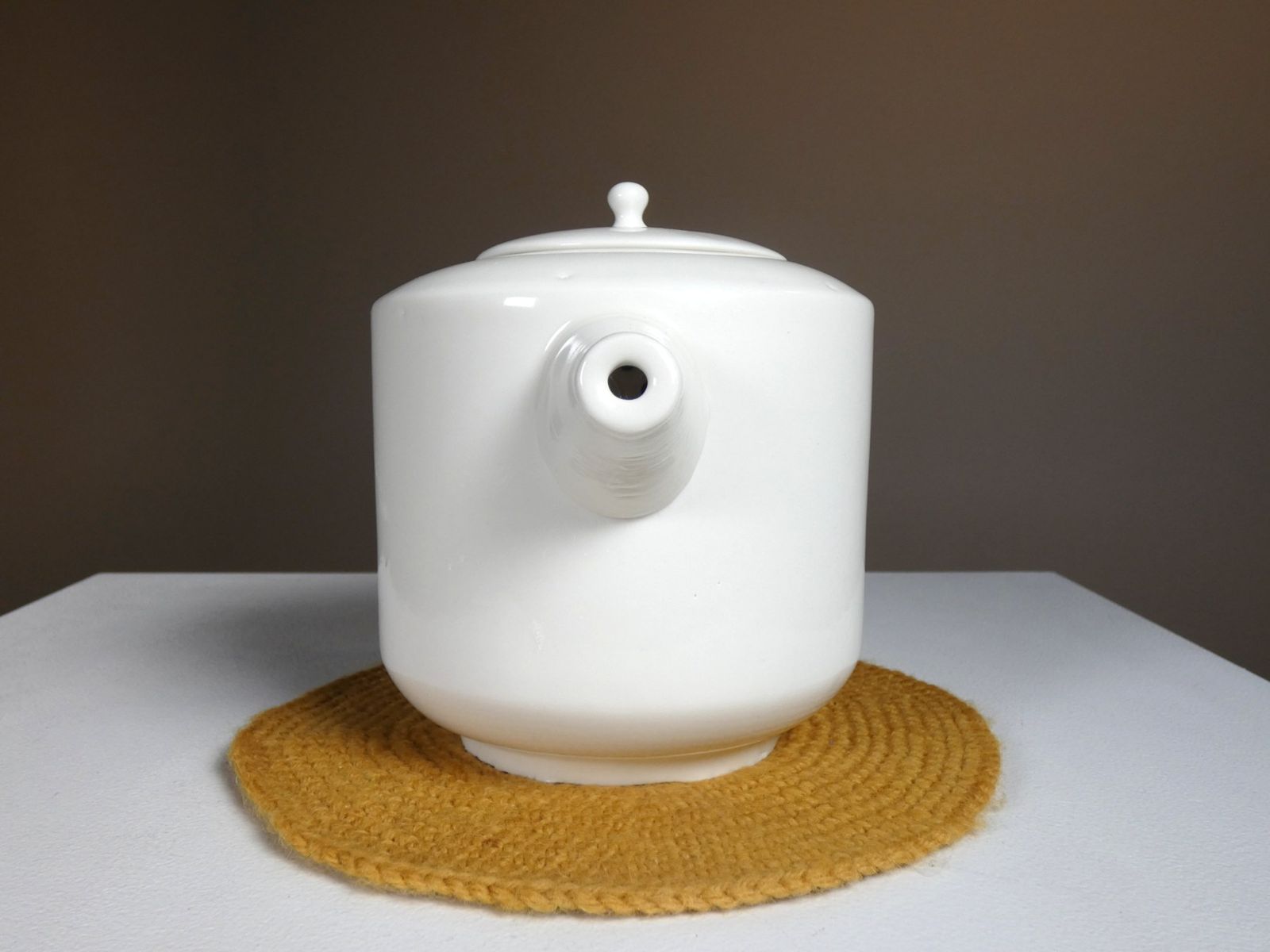
2. Spout - Japan
Short and wide, aiming for the clean, steady pour of Japanese teapots.
3. Handle - United Kingdom
An early styled British handle, closer to the first teapots that arrived in Britain.
4. Handle Grip - Soviet Union
A deep long, upright loop that takes the whole hand.
5. Body - Finland
A straight, quiet cylinder with a soft shoulder, in the spirit of Finnish everyday tableware, inspired by Iittala and Marimekko designs.
How might one tea set bring together the tea cultures of different nations, using both classical and modern production techniques?
Moodboard
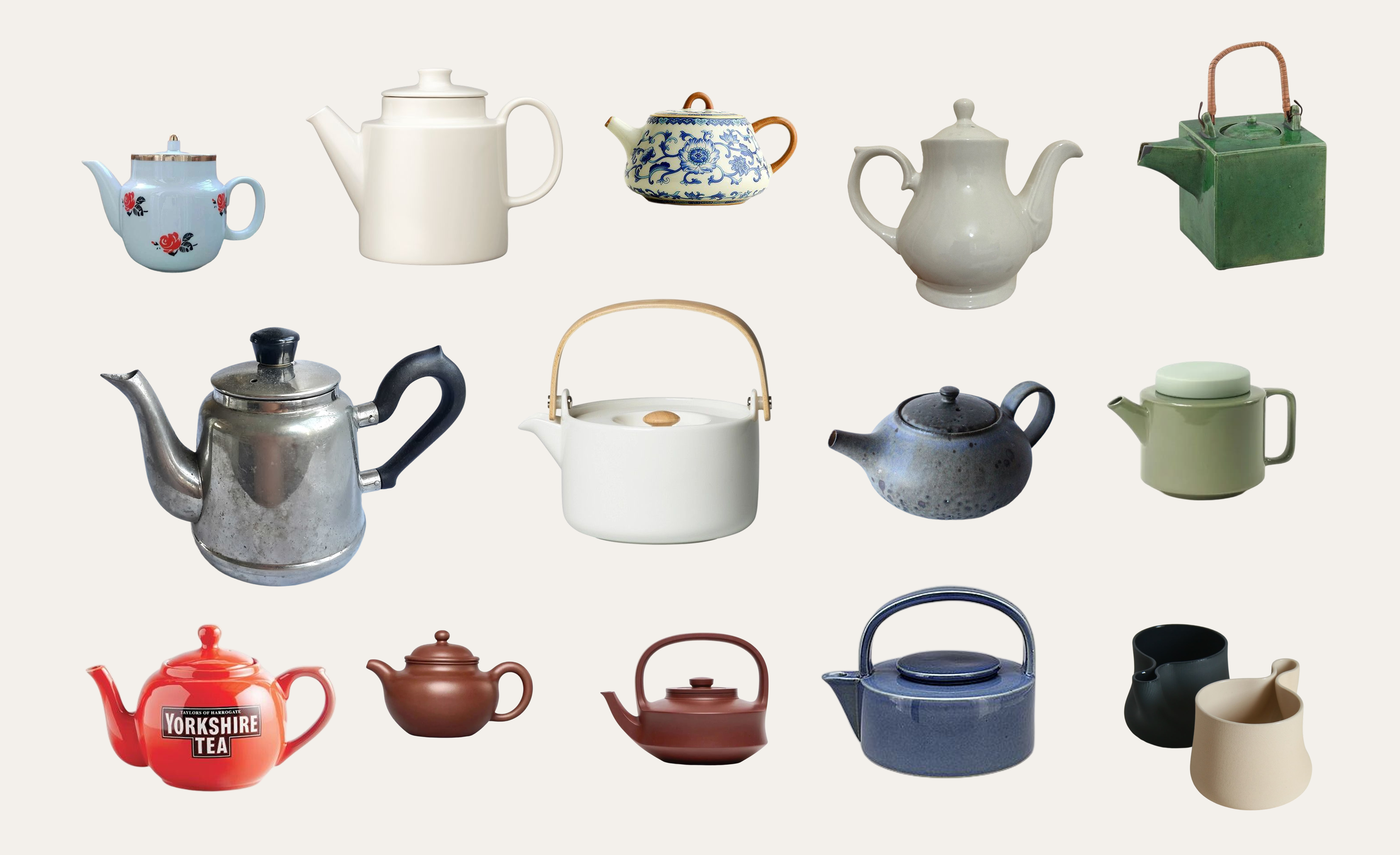
Teapots from Russia, China, Japan, Britain and the Nordics were collected to compare how each culture brews and shares tea. Having these teapots side by side showed how differently each culture treats the spout, handle, lid and overall form.
Sketches
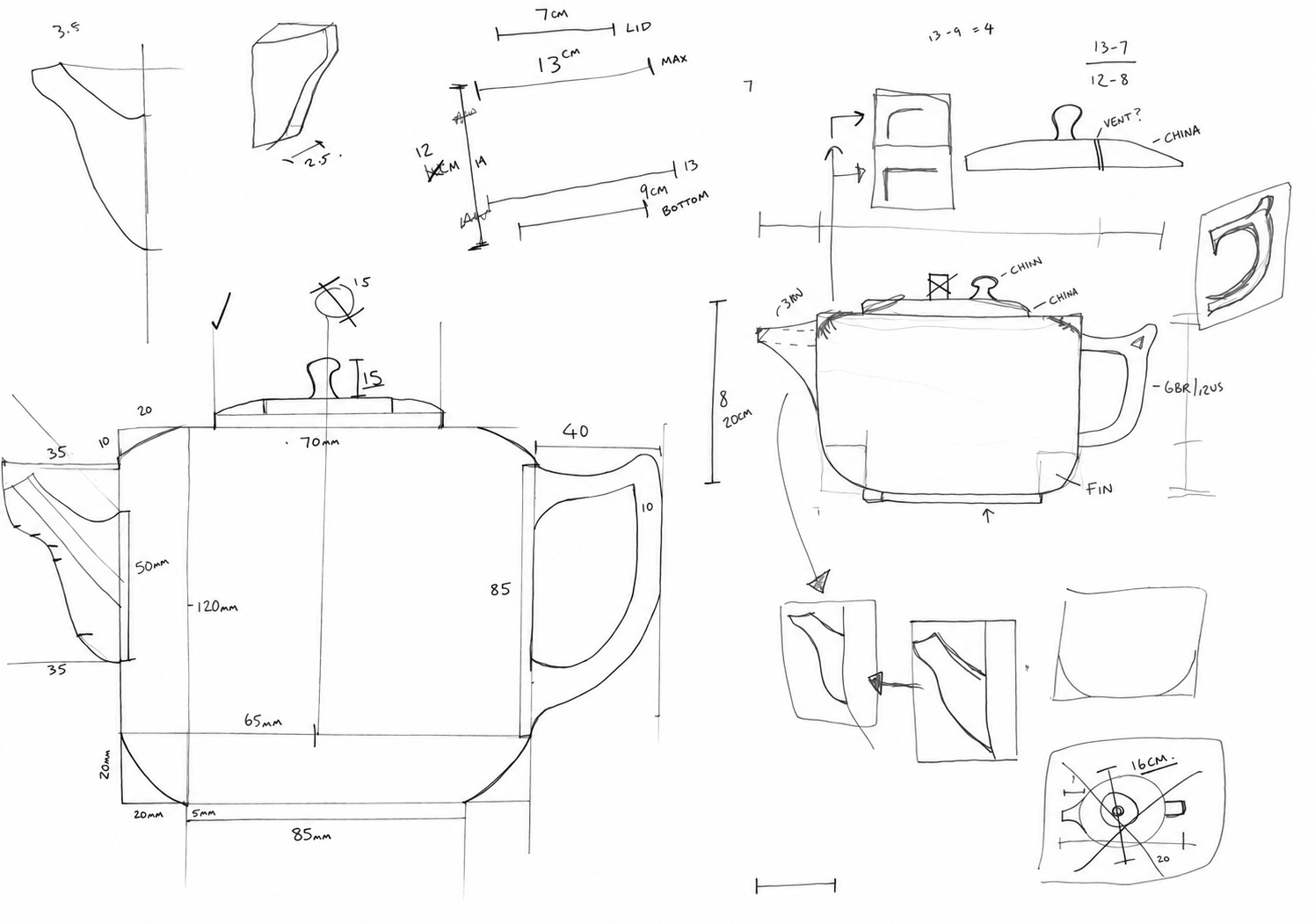
The form was worked out on paper in true scale, with the body, lid and handle drawn as separate parts from the start. Thinking in parts early mattered, because each one would later need its own mould. The components were then modelled in Rhino.
Making the TEEKANNU
Slip casting is a long and precise process. Each part was designed, printed or turned as a model, captured in a plaster mould, cast in liquid porcelain and finally joined, fired and glazed.
Body
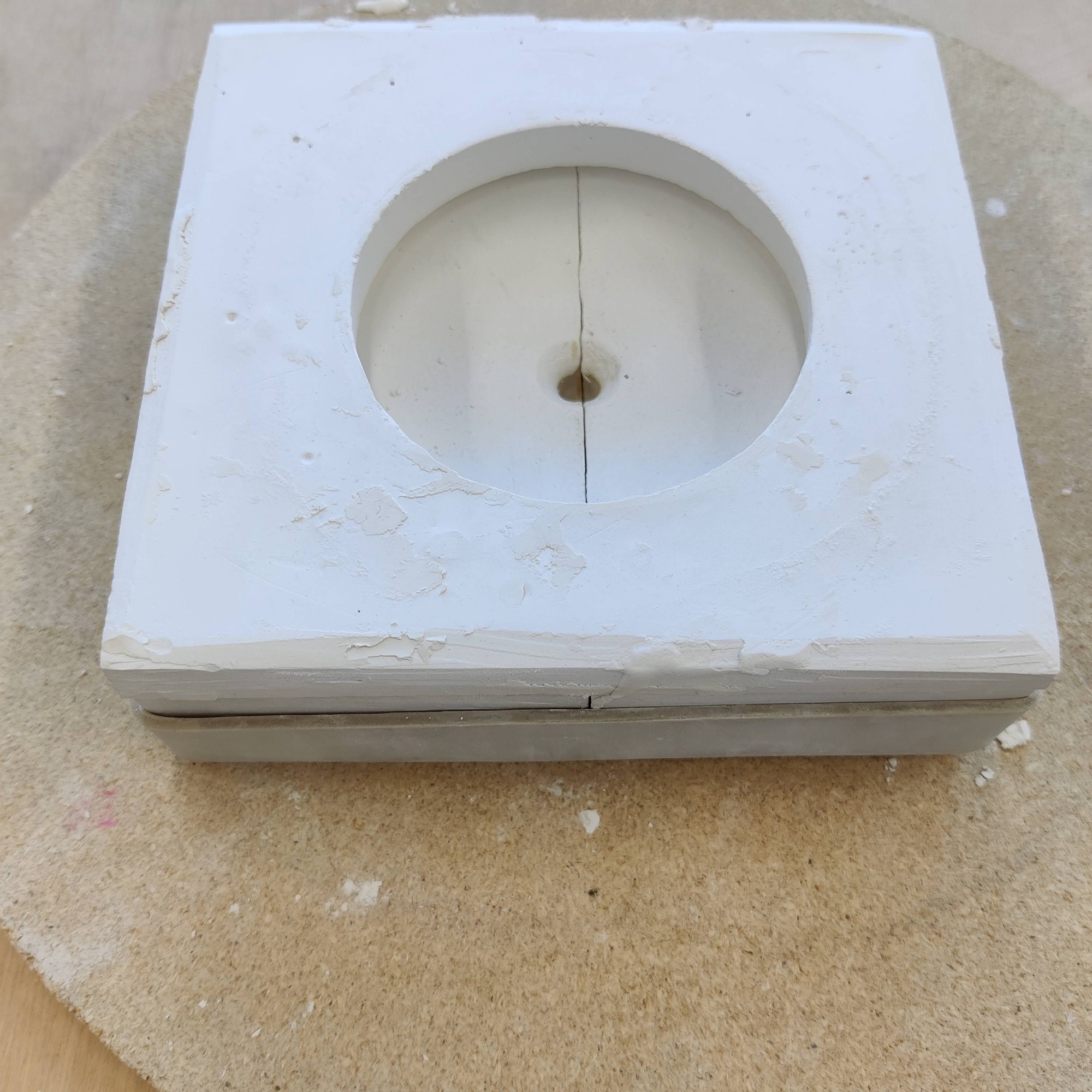
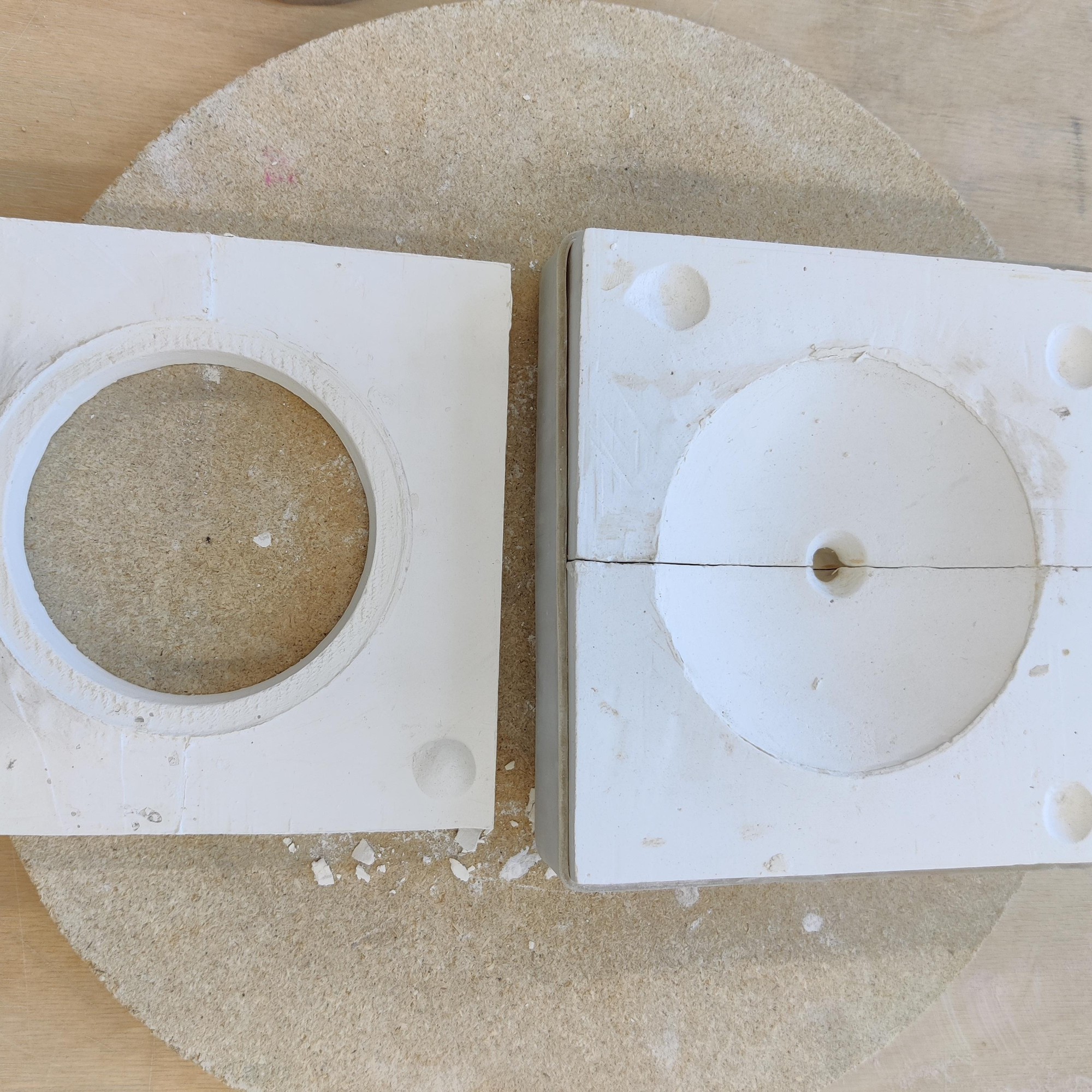
A 1 mm steel template was waterjet cut from the CAD profile and clamped to the arm of a plaster wheel. Around 3.5 litres of plaster were poured and turned against the template to form the model, the “mould for the mould”. A three part plaster mould was then cast around it.
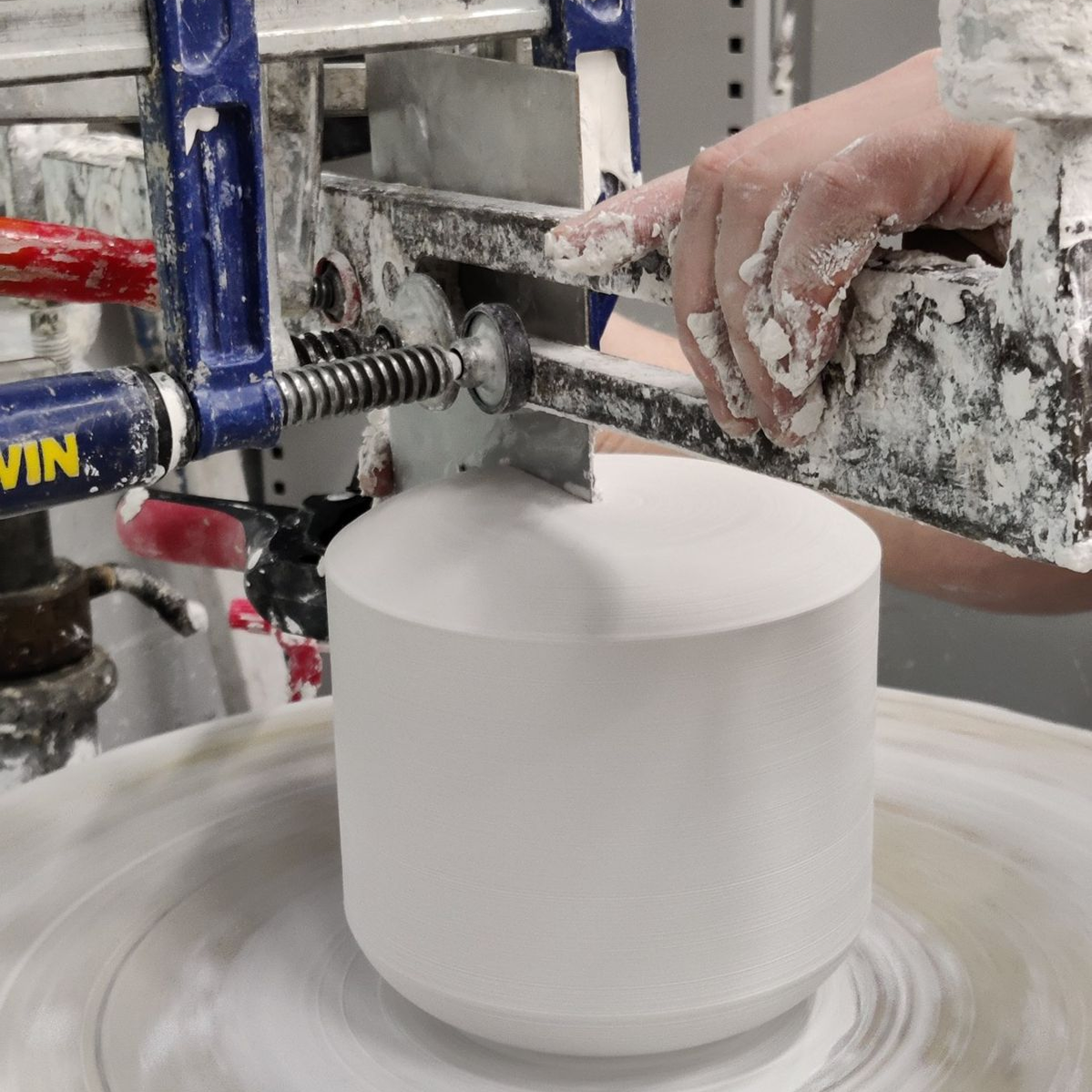
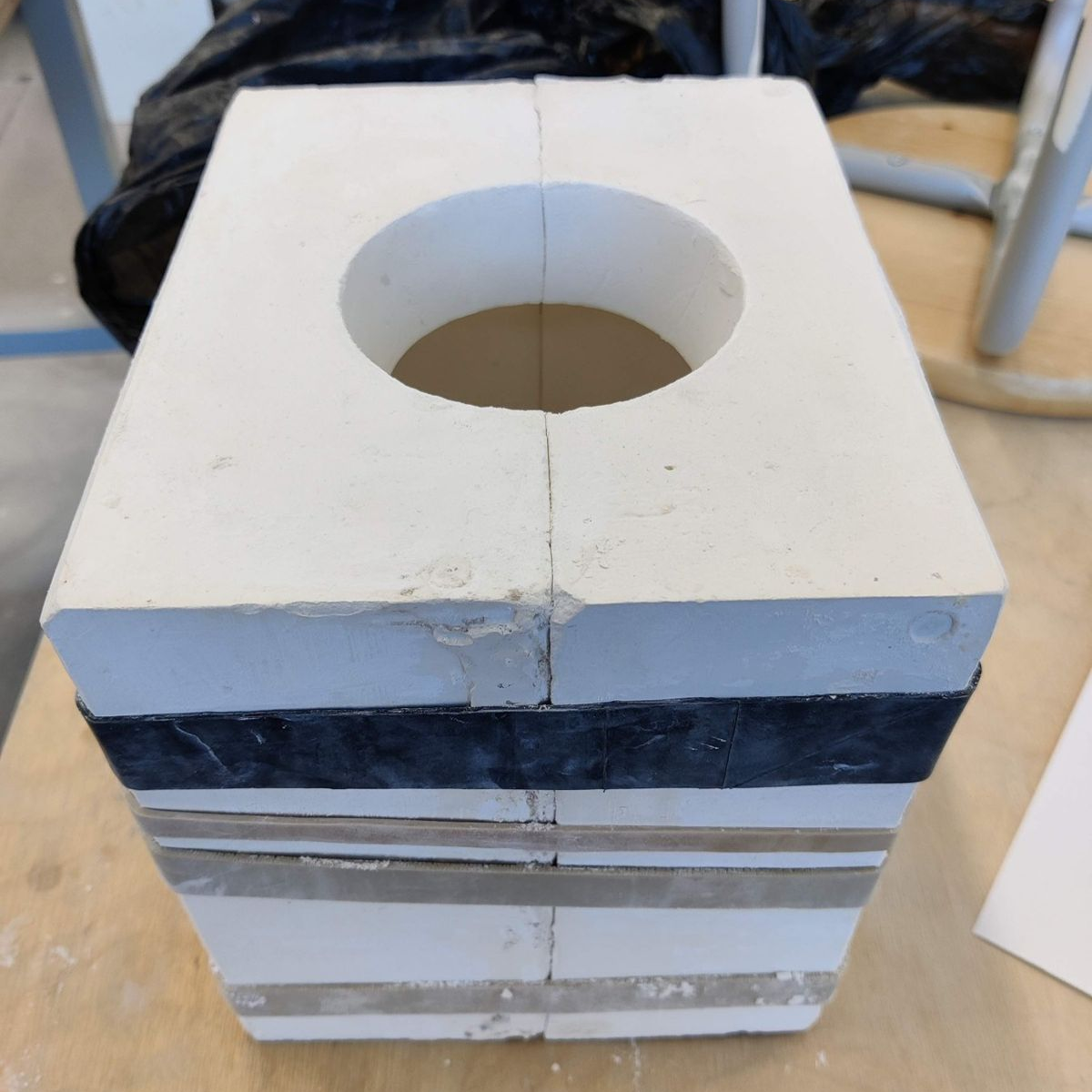
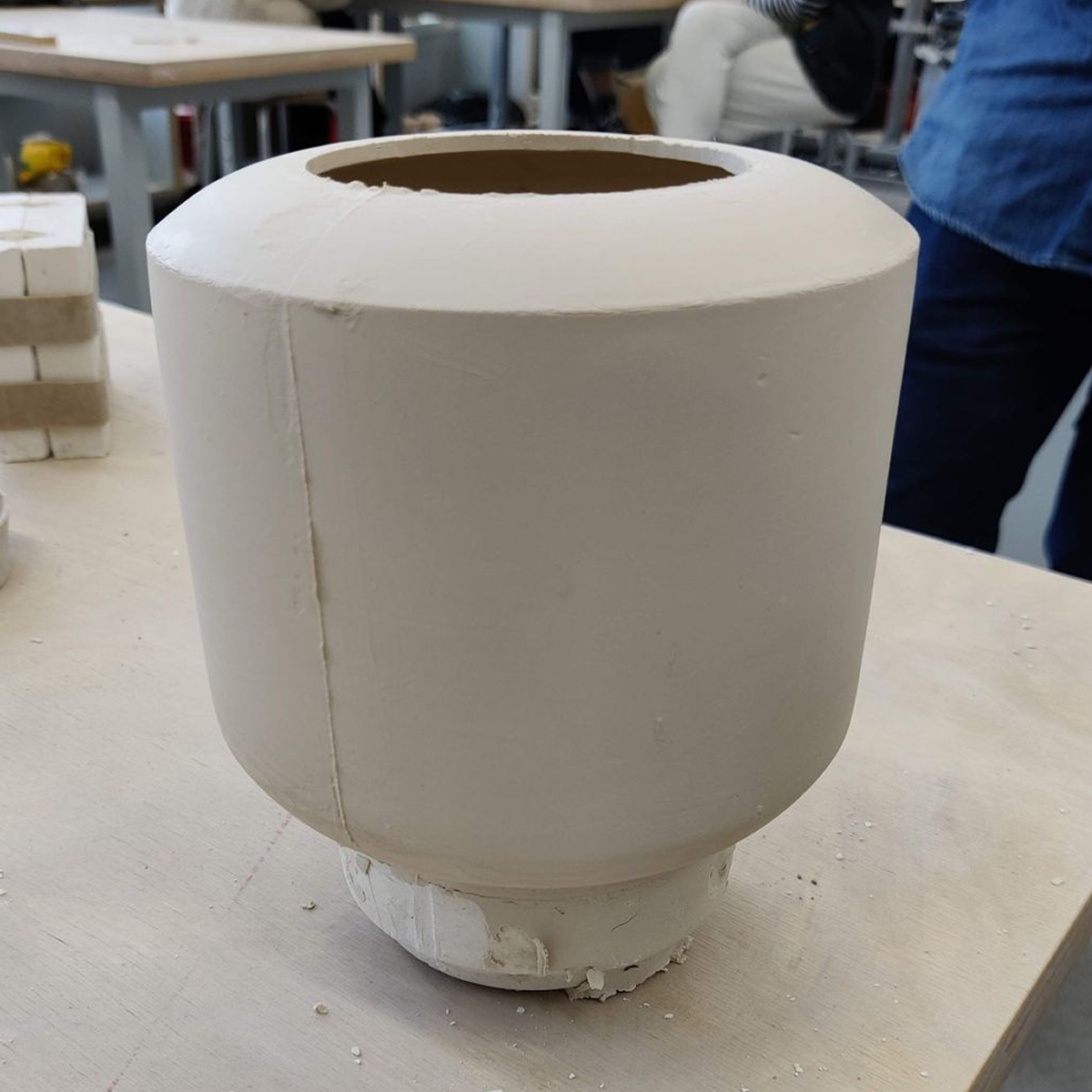
Handle & Lid
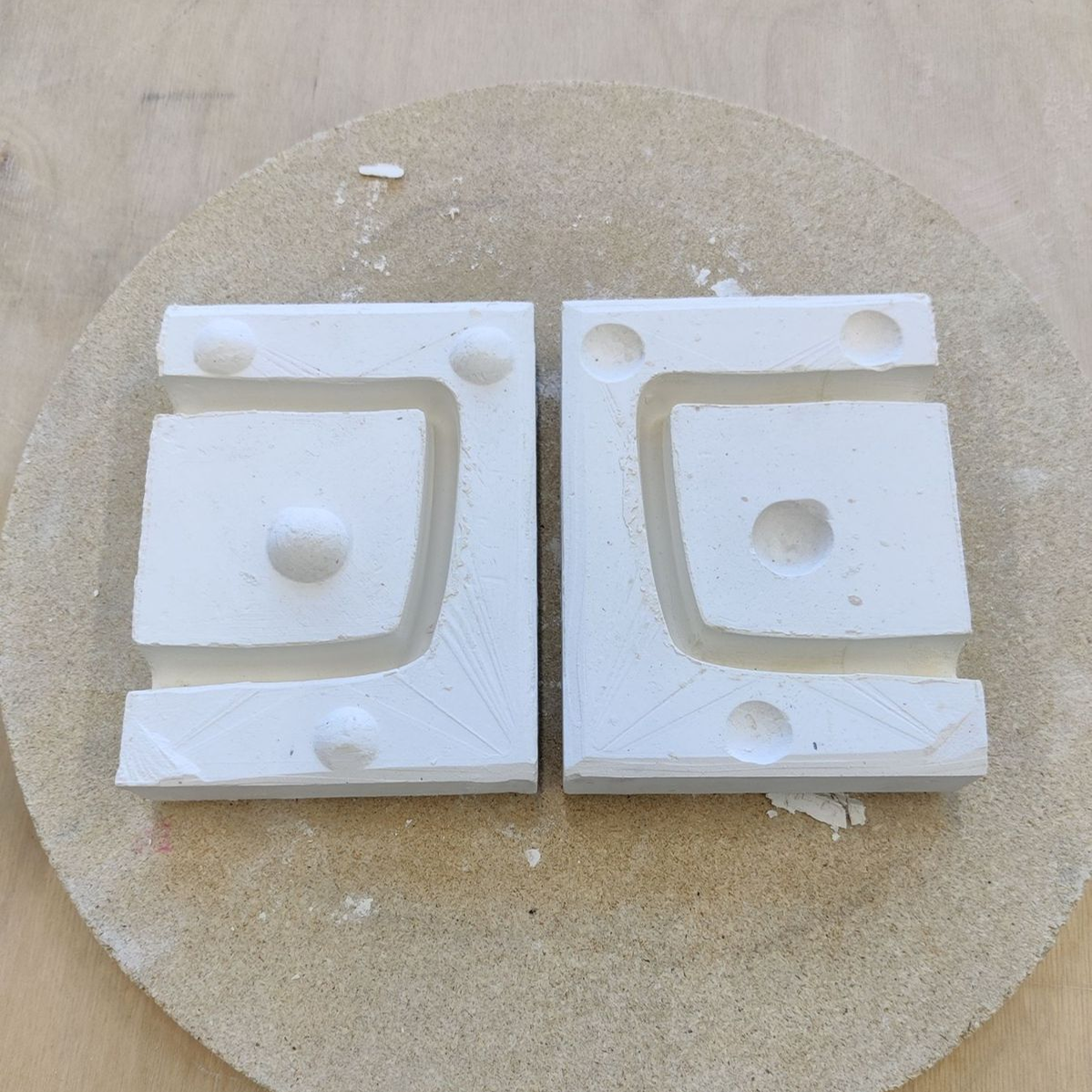
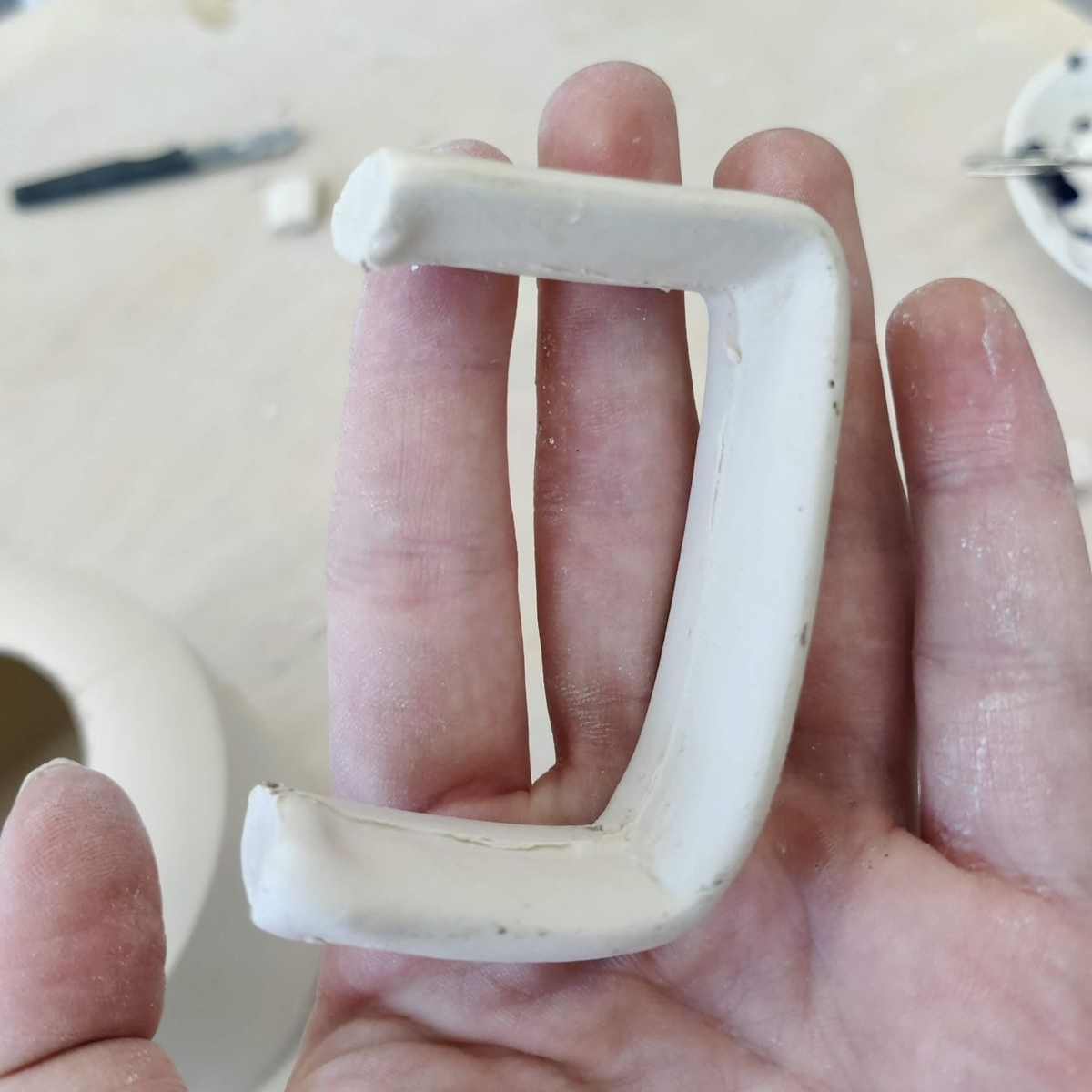
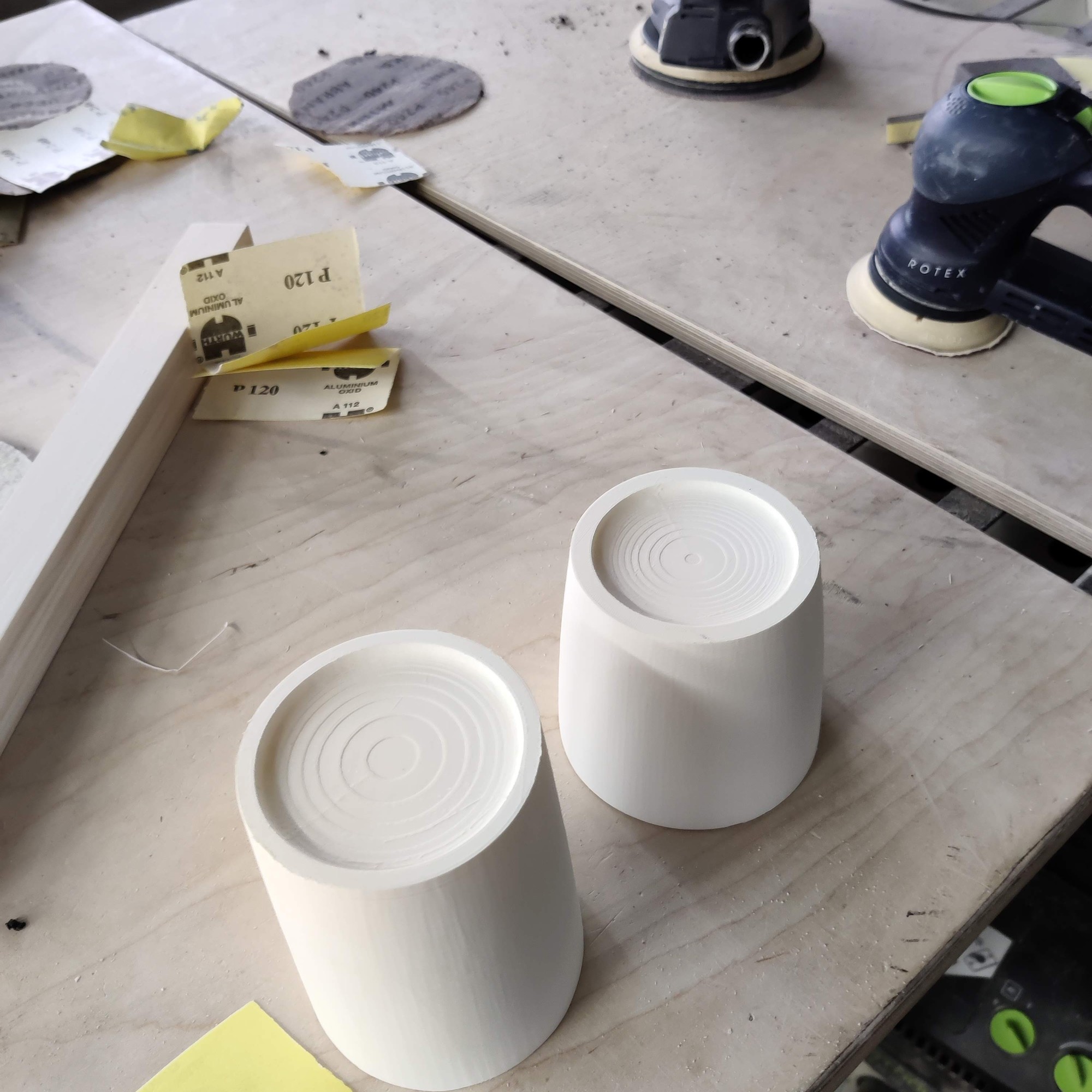
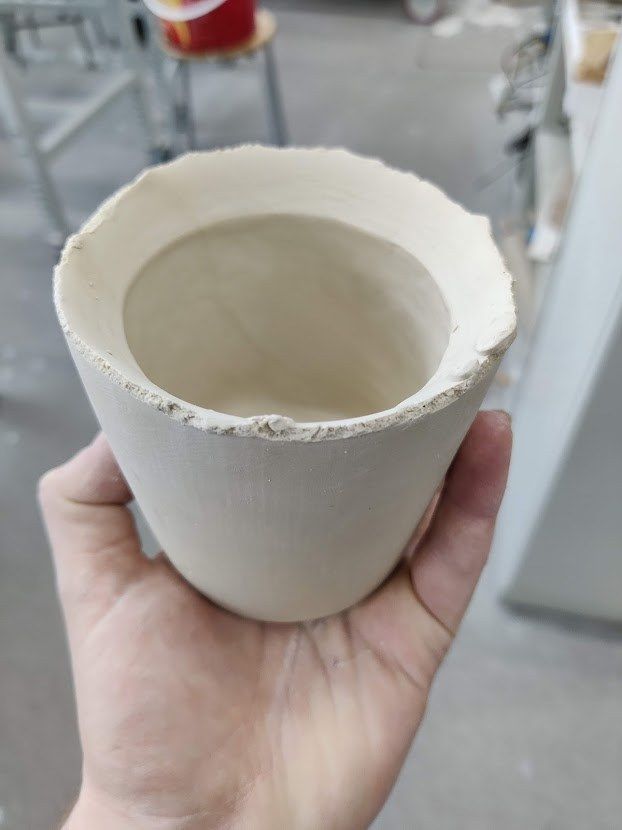
Both parts were modelled in Rhino, 3D printed and sanded smooth before being captured in two part plaster moulds. After drying overnight, each mould was filled with slip and topped up for around an hour, then left to rest before the part was removed and trimmed.
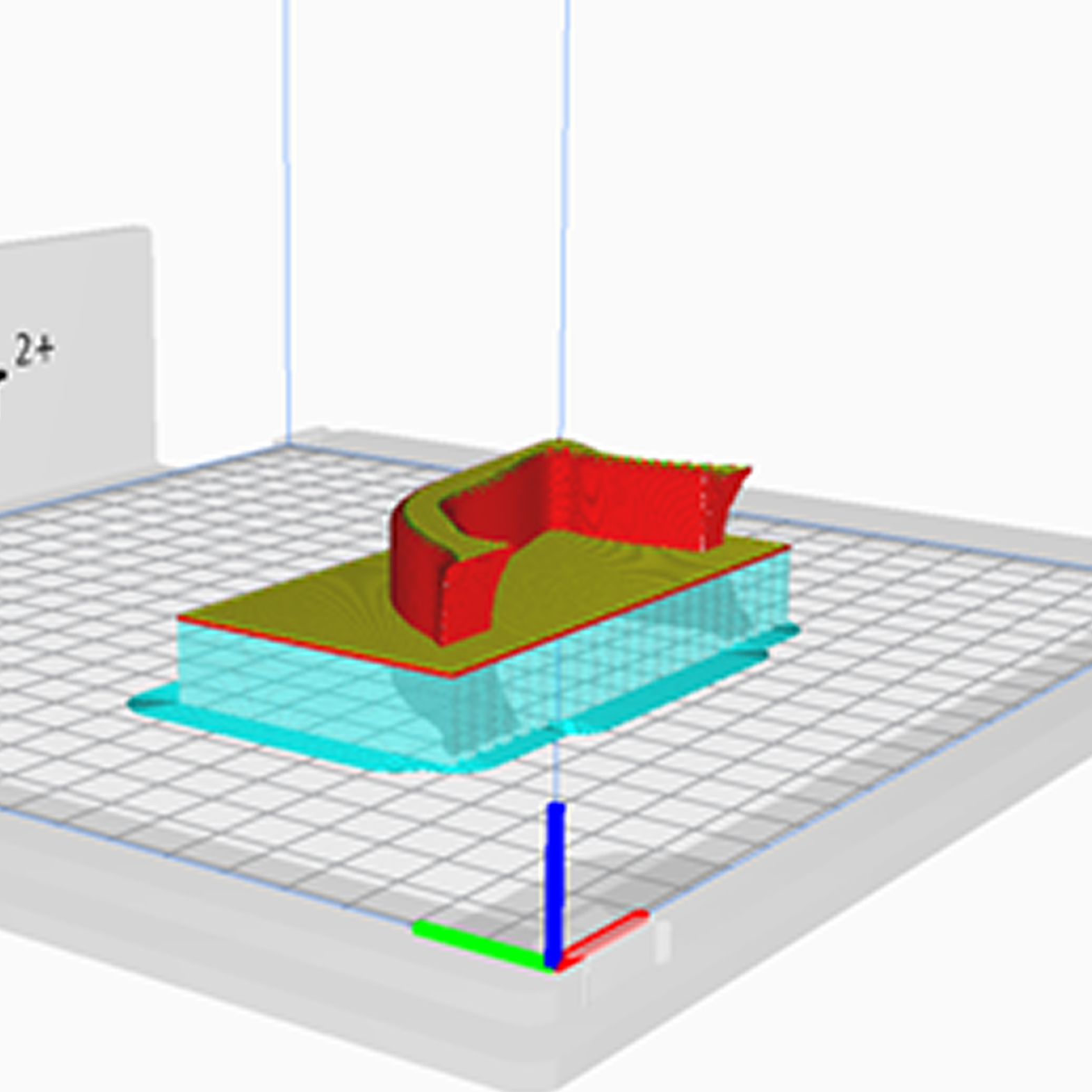
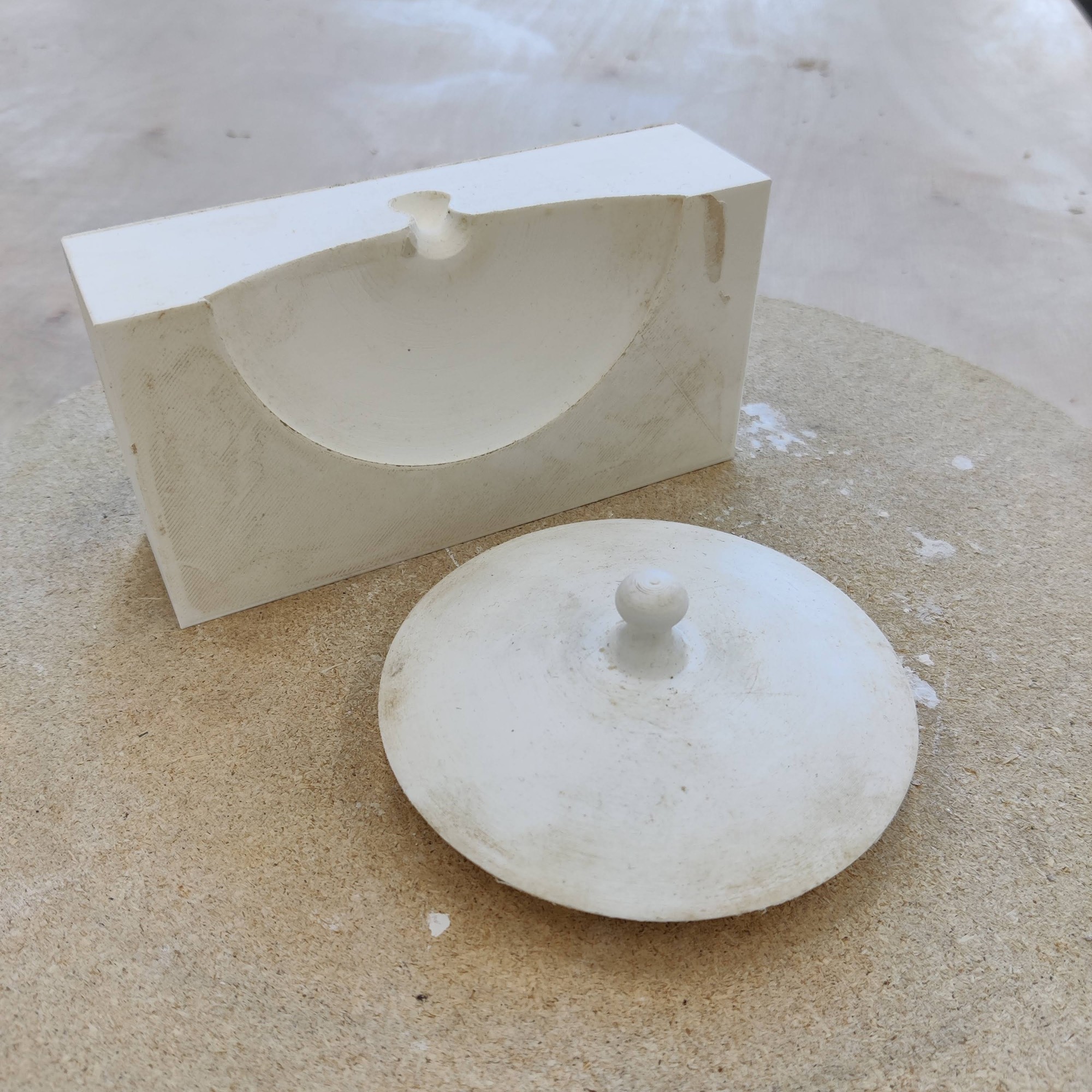
Spout
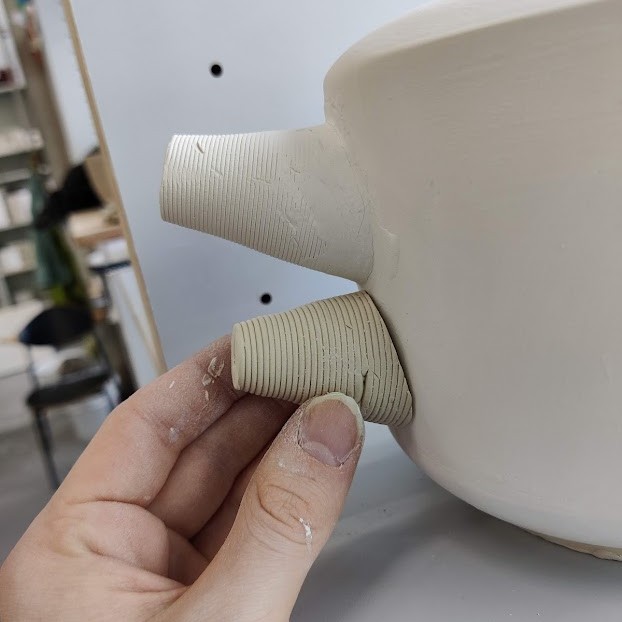
The spout was produced on an experimental ceramic 3D printer. Many sizes could be printed and compared on the pot due to the rapid printing speeds (under 10 minutes per spout), in search of a smooth, laminar pour.
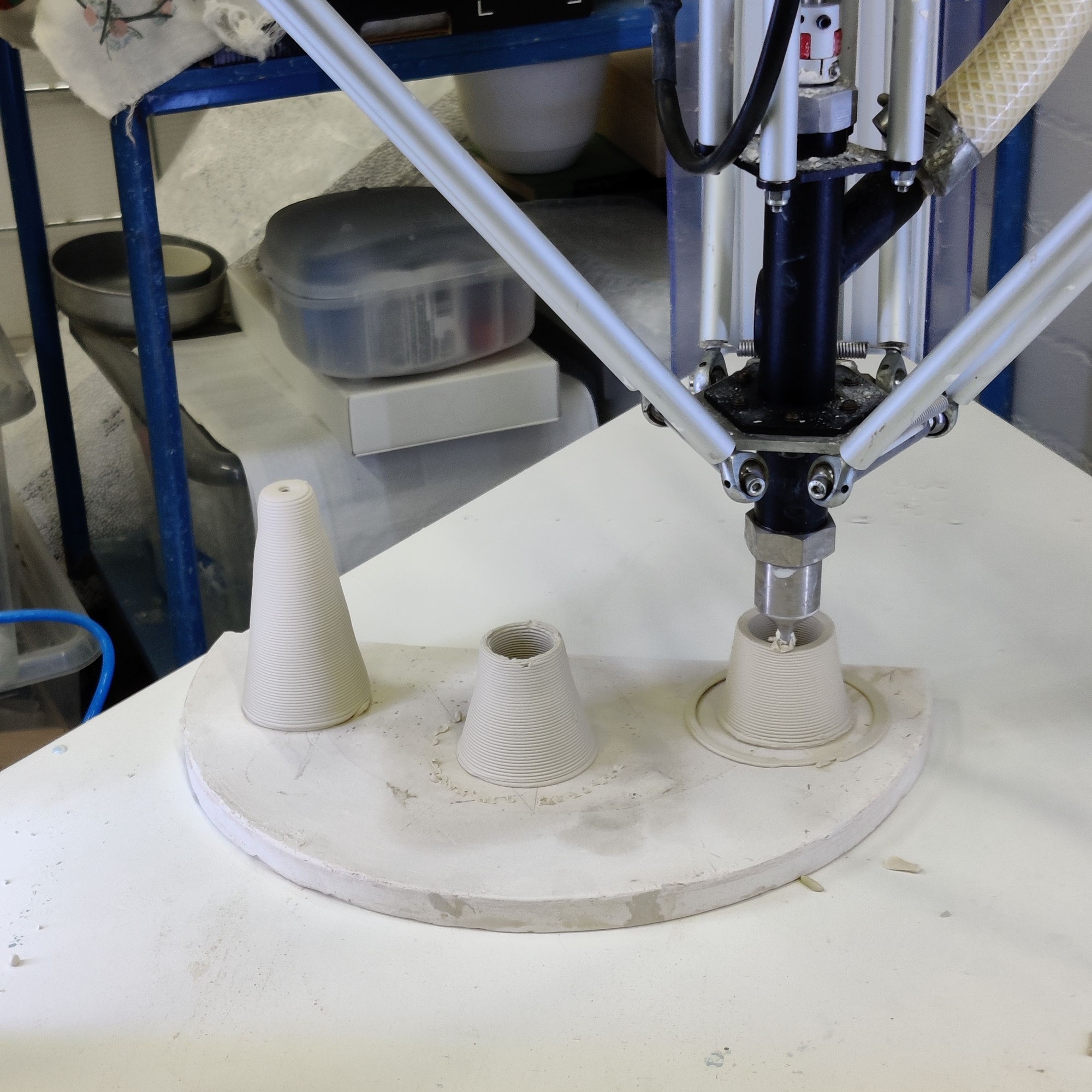
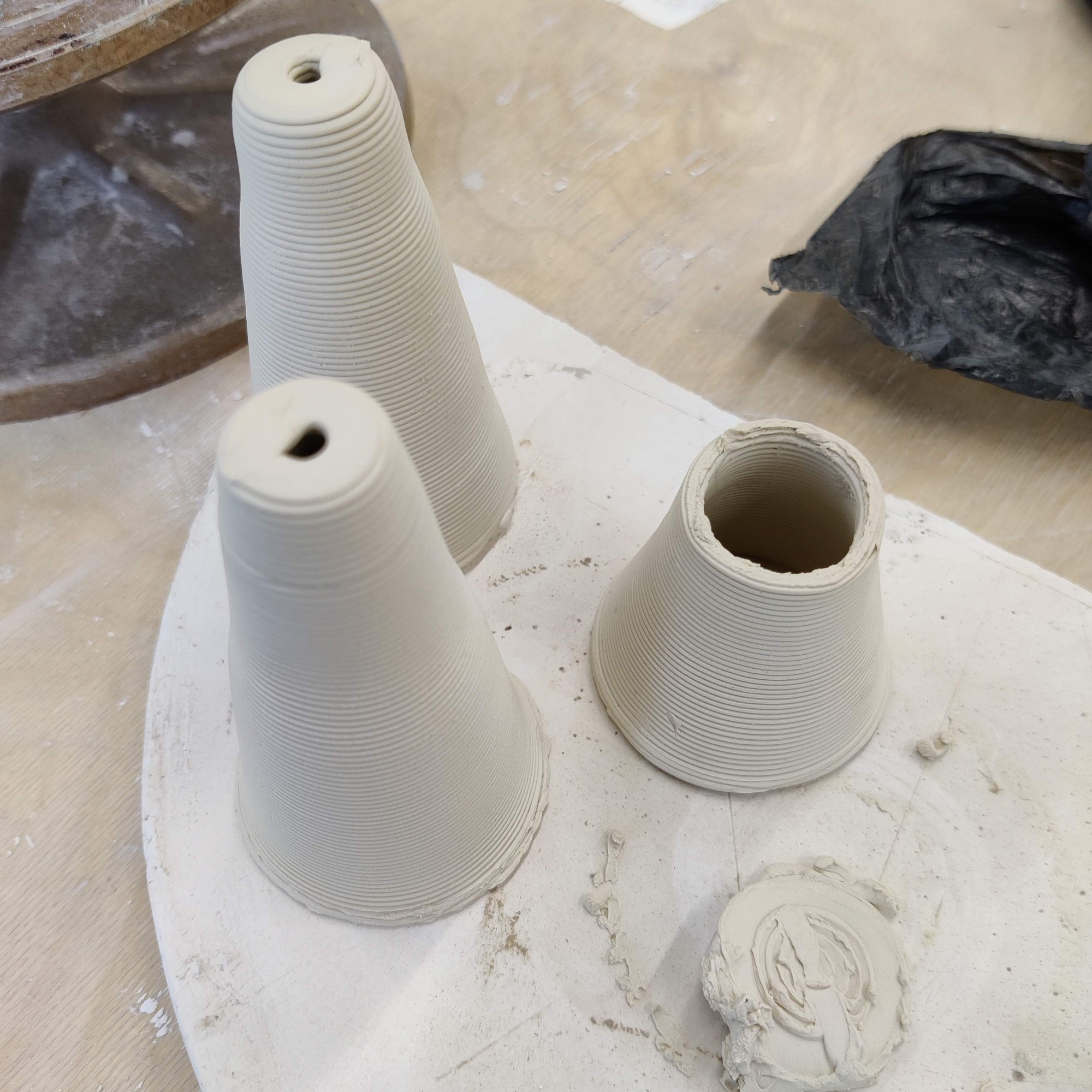
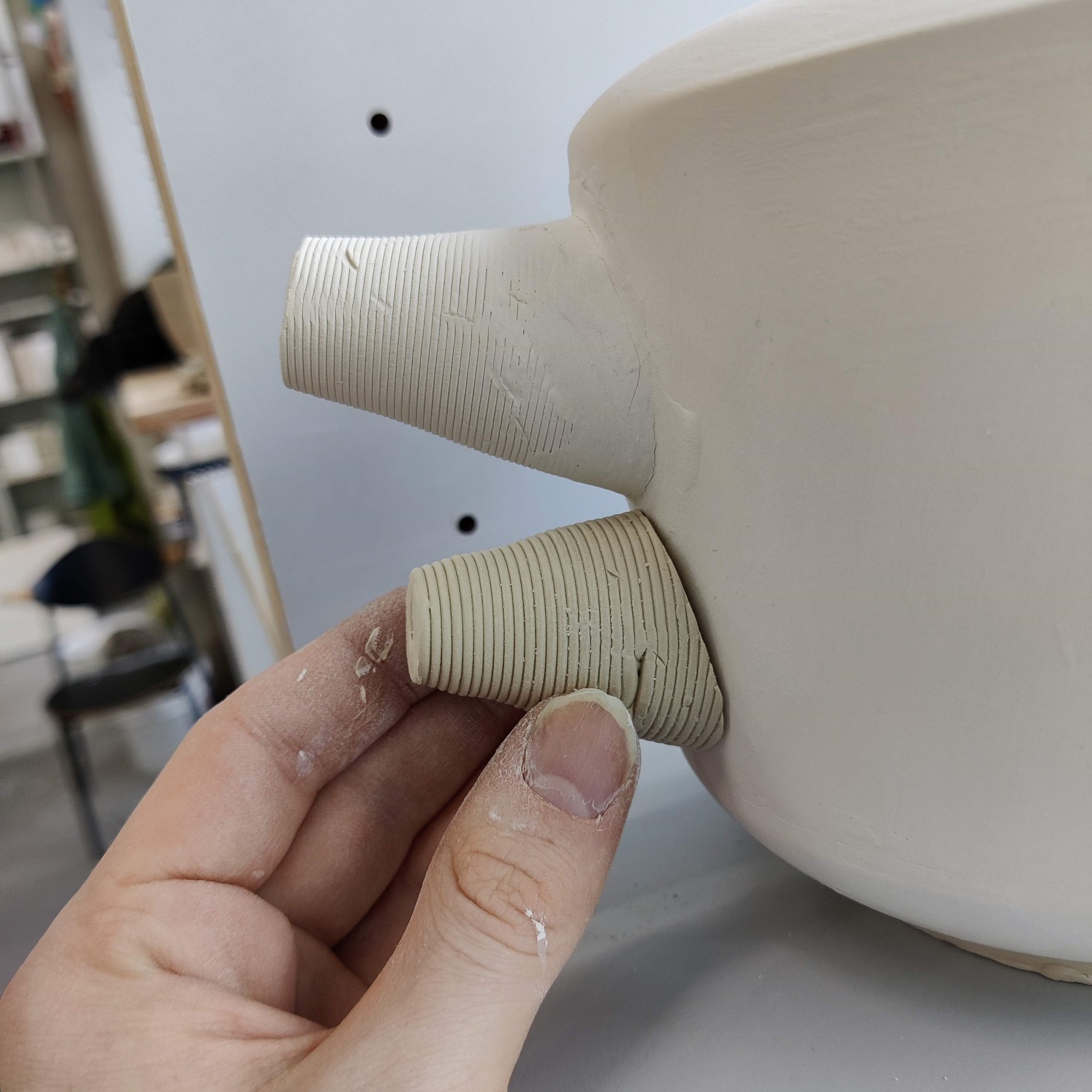
Joining & Finishing
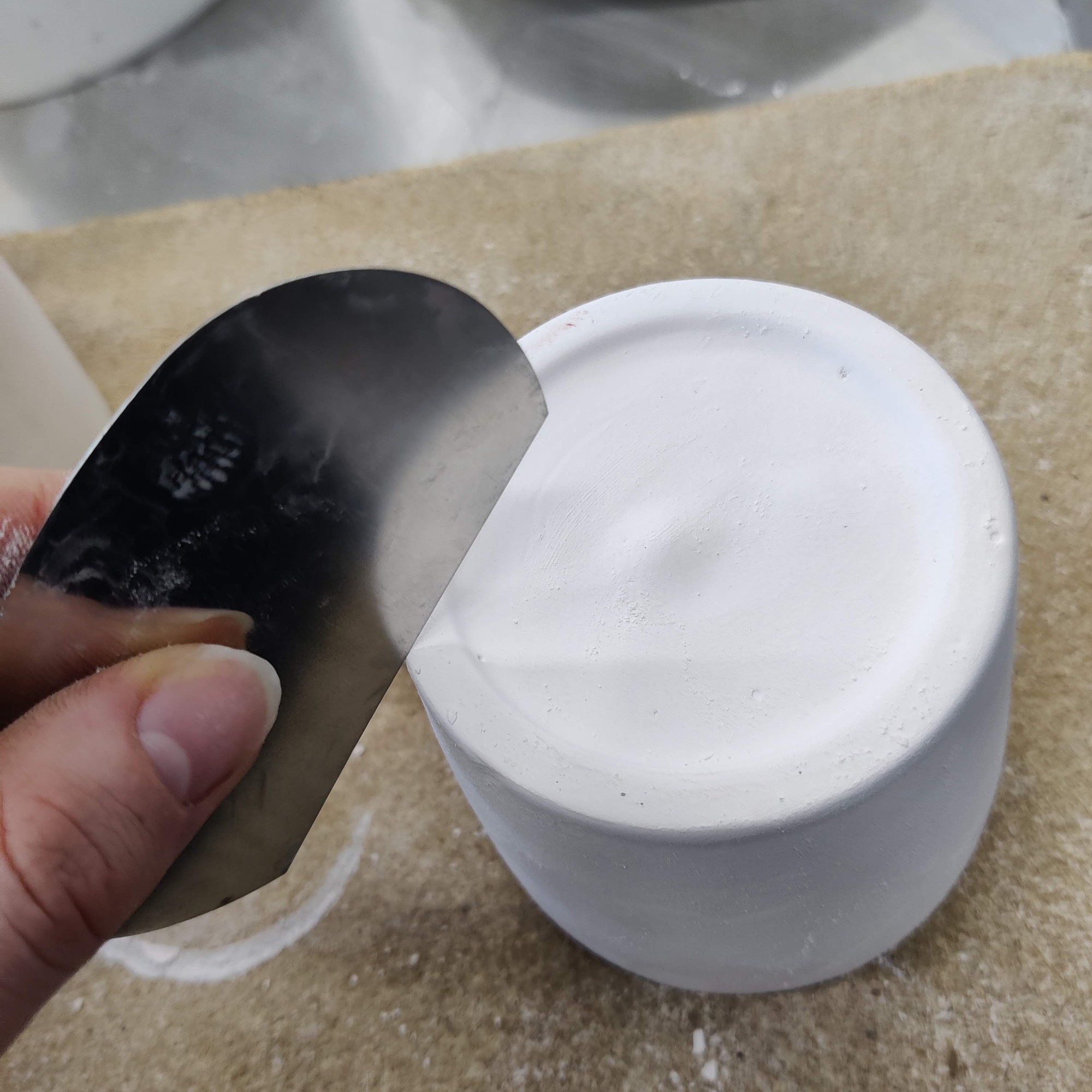
Components were finished and smoothed. Then the body, handle and spout were joined with slip and left to air dry slowly.
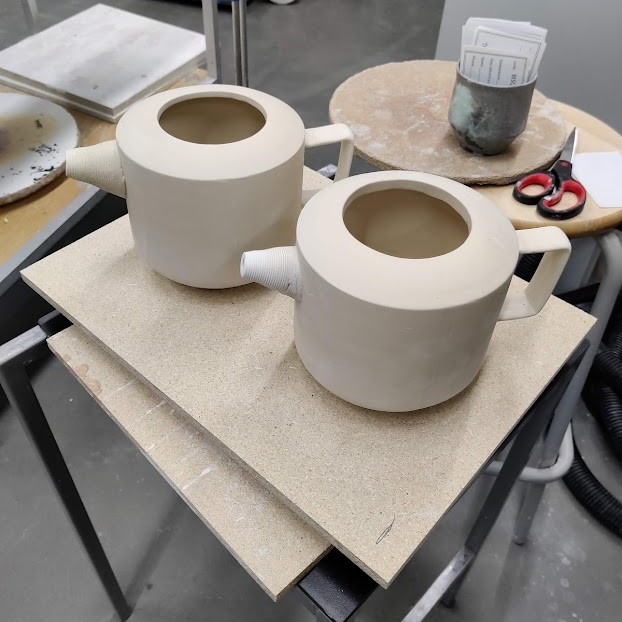
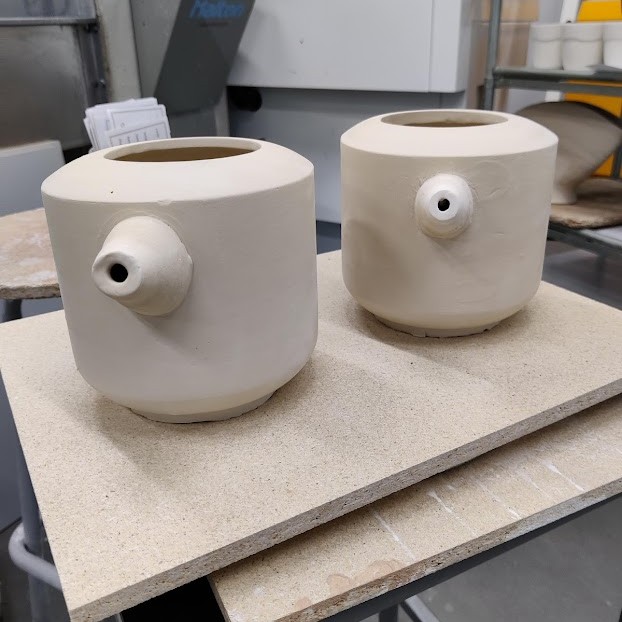
Firing and Glazing
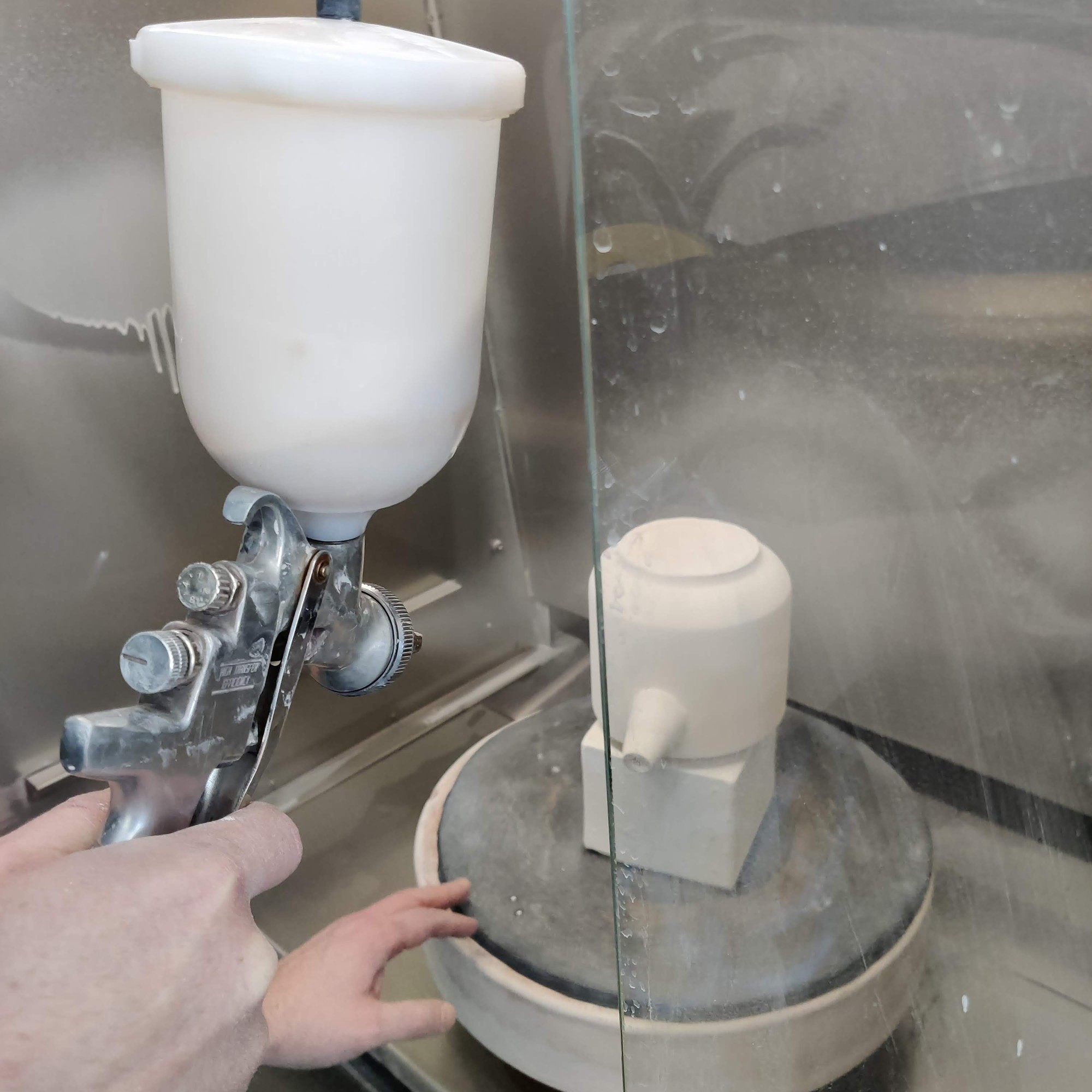
A slow bisque firing. The interiors were glazed by swirling, and the outsides sprayed in the glaze booth with KXX5 glaze before the final high firing, glaze was removed from the bottom of the teapots and mugs.
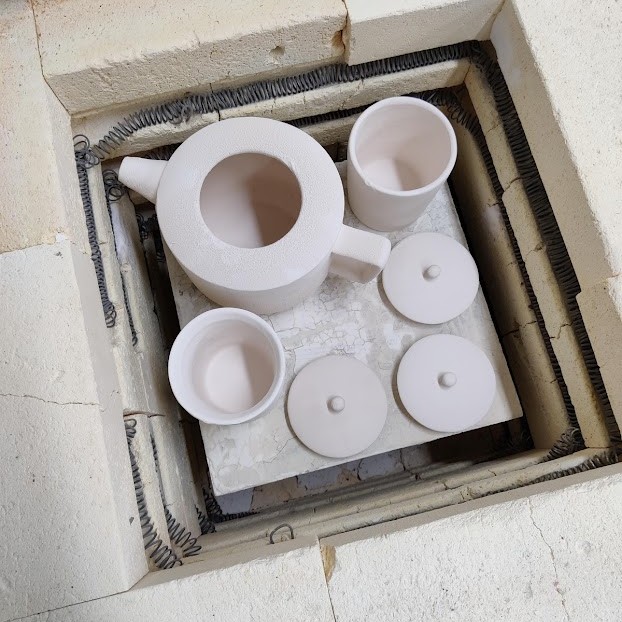
The Final Set
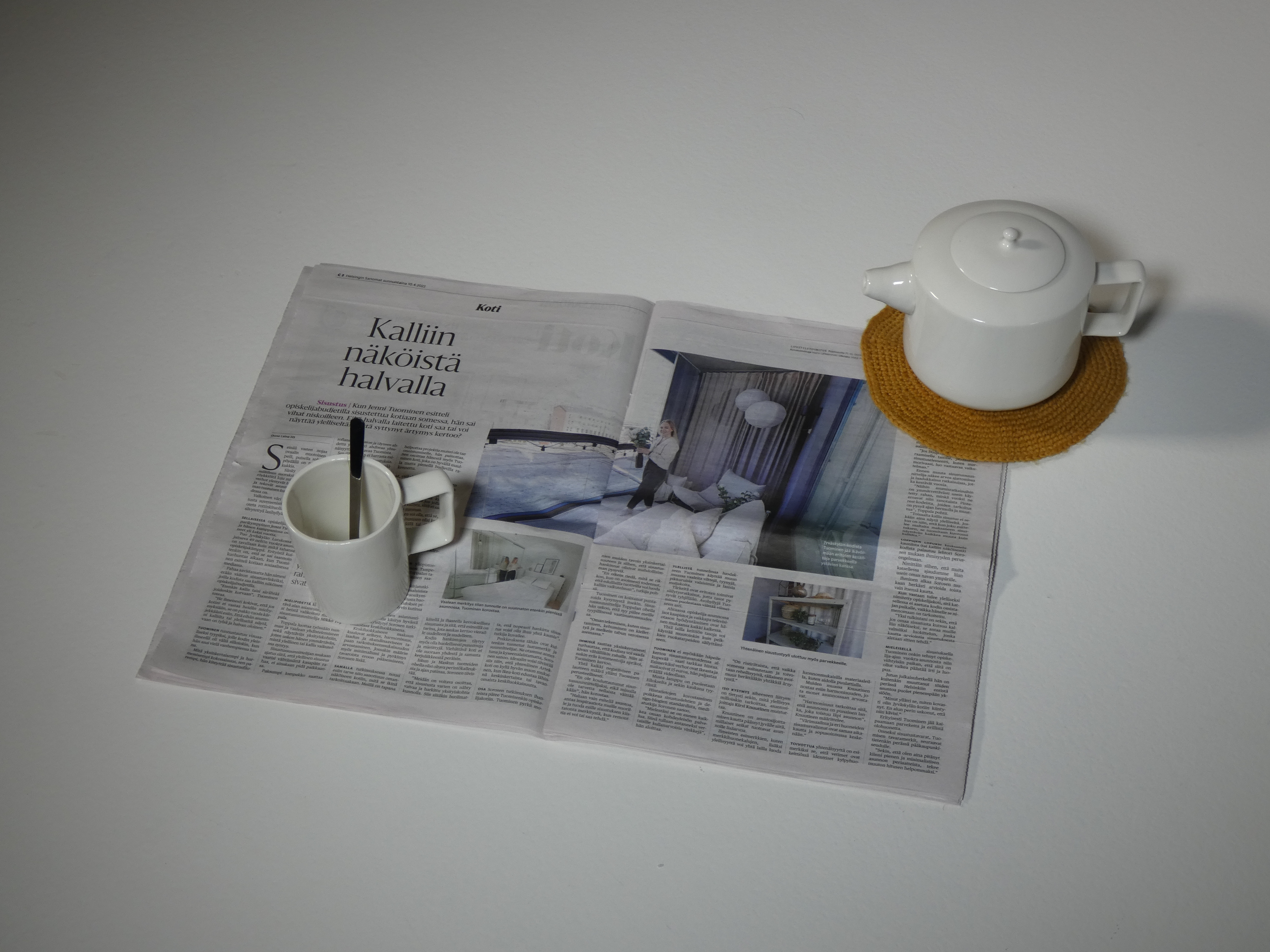
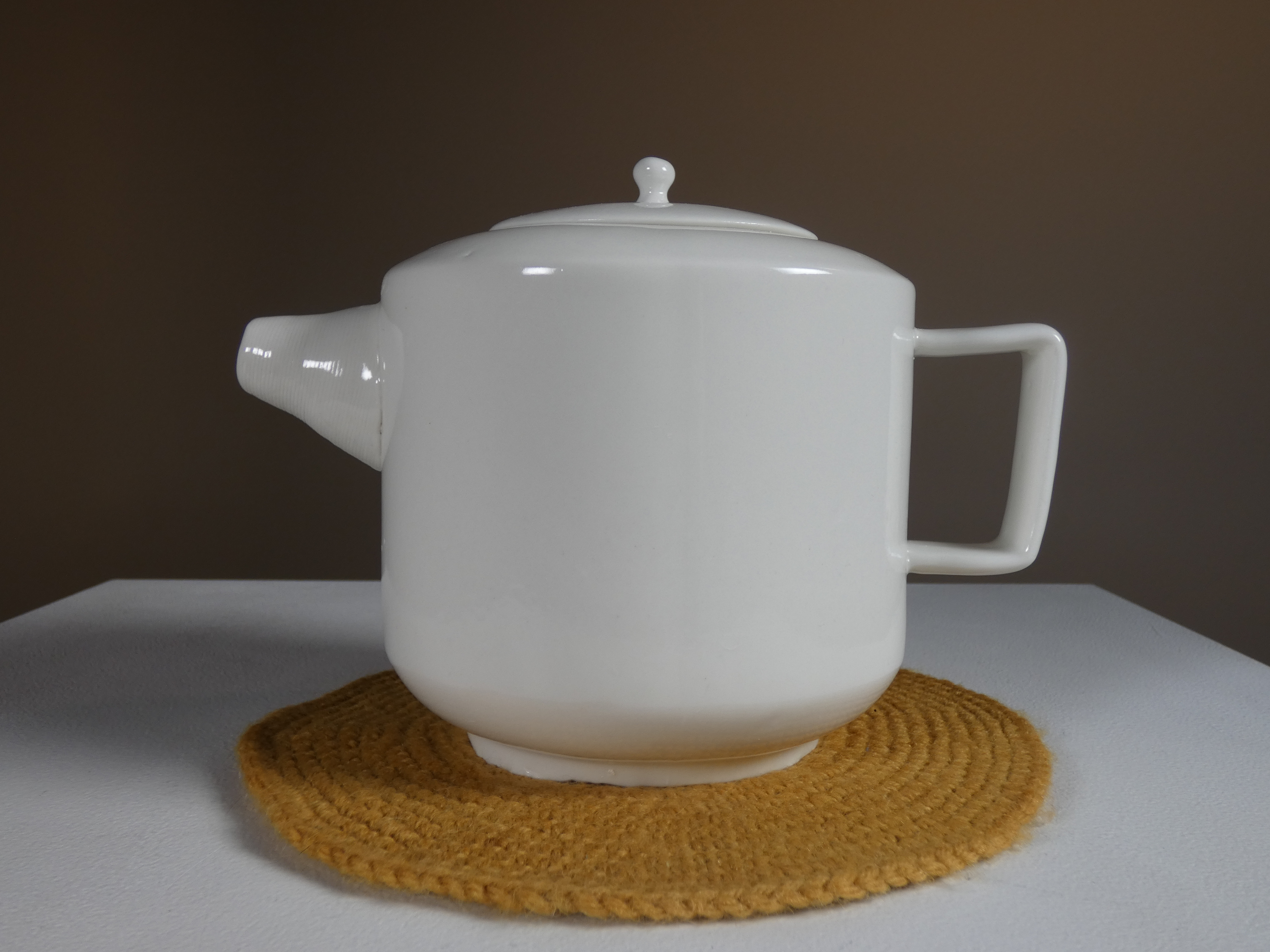
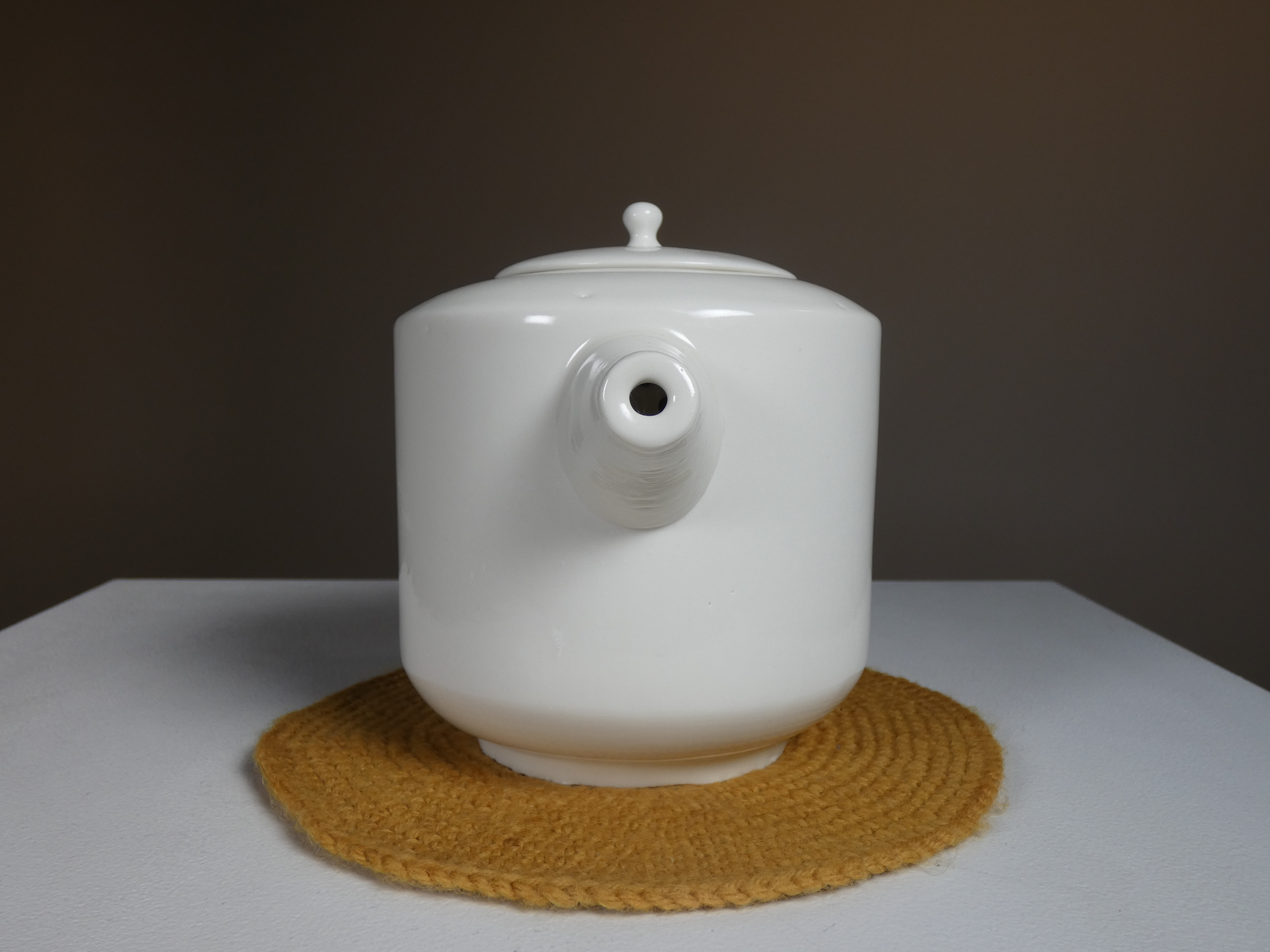
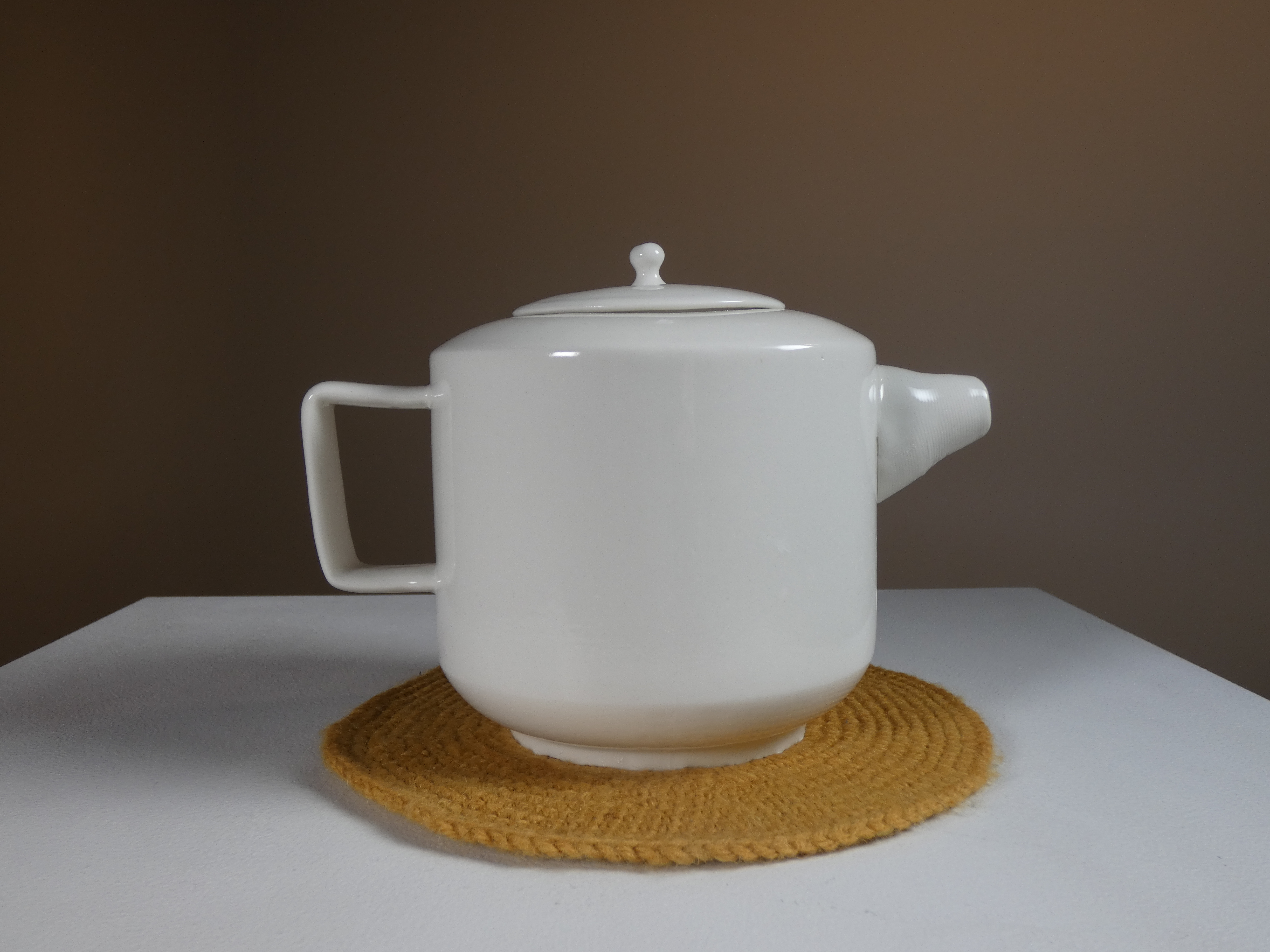
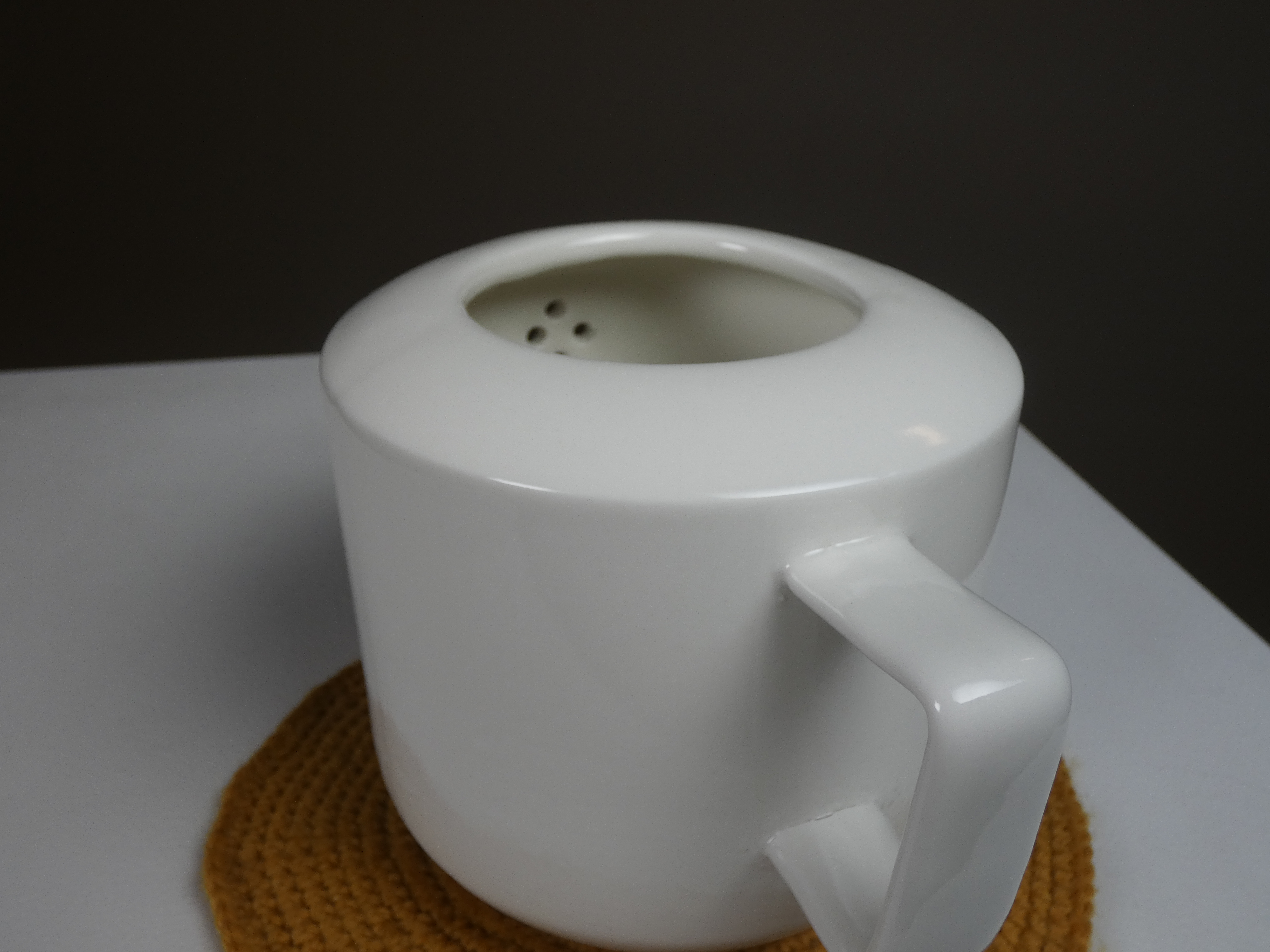
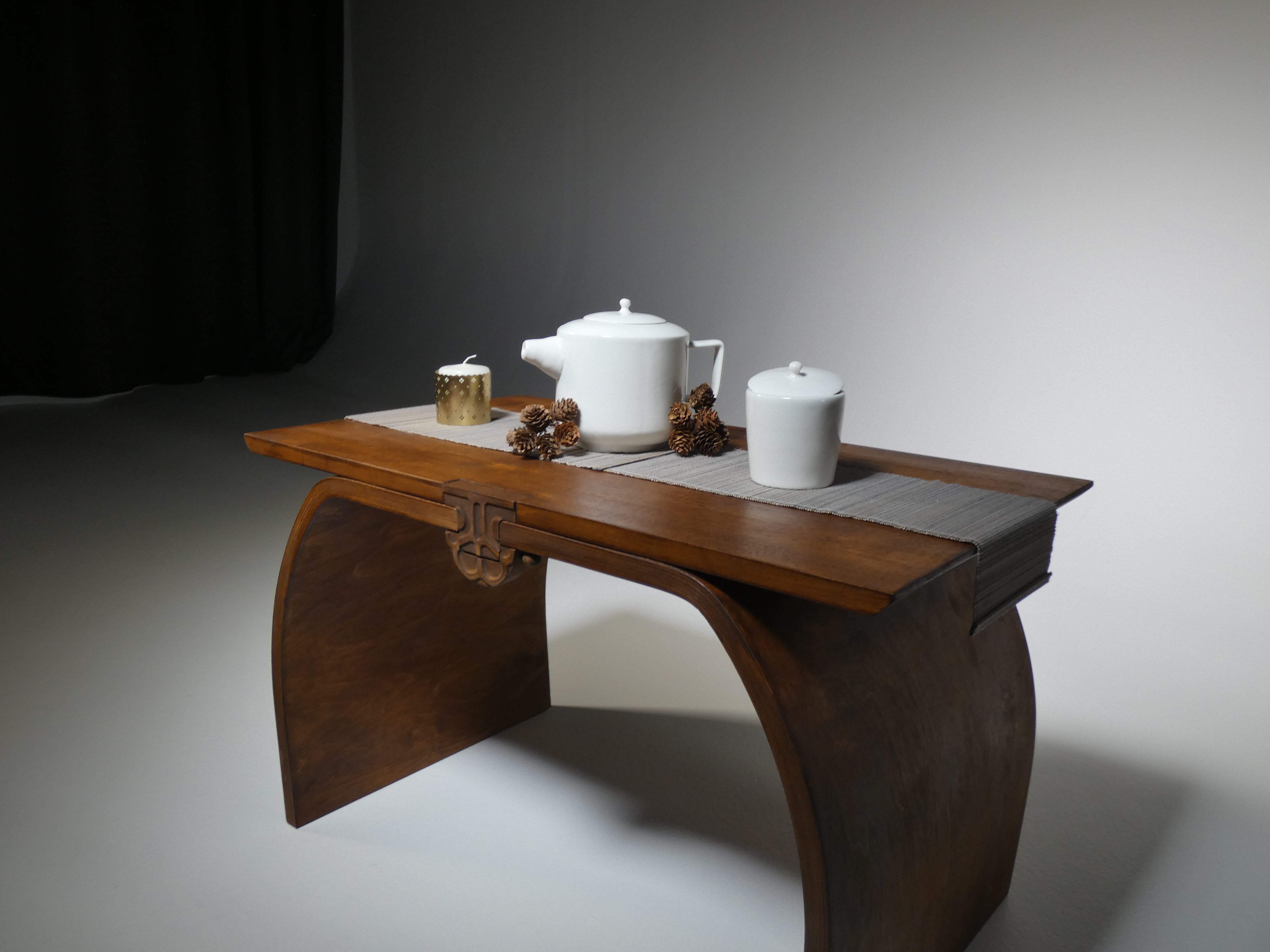
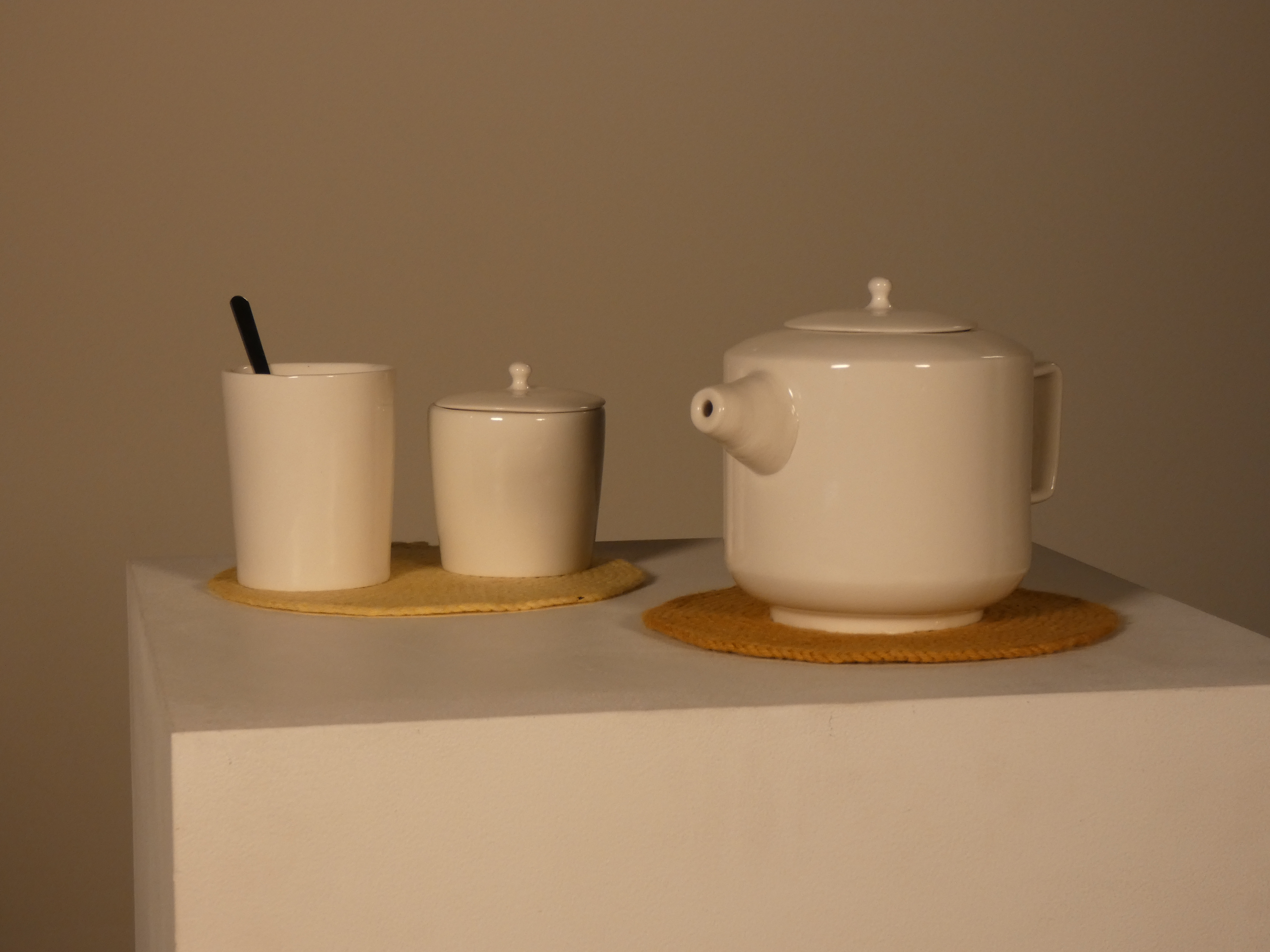
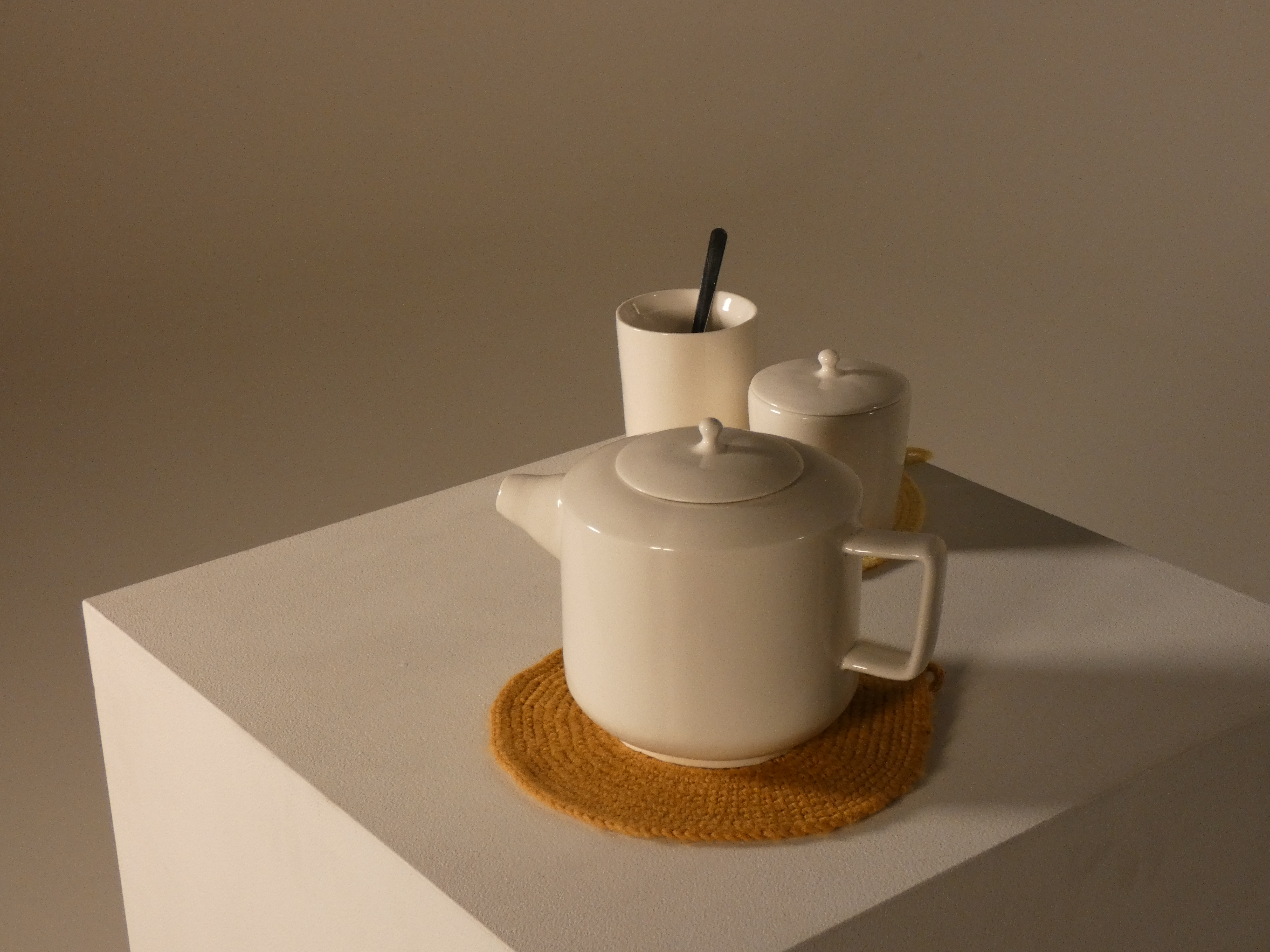
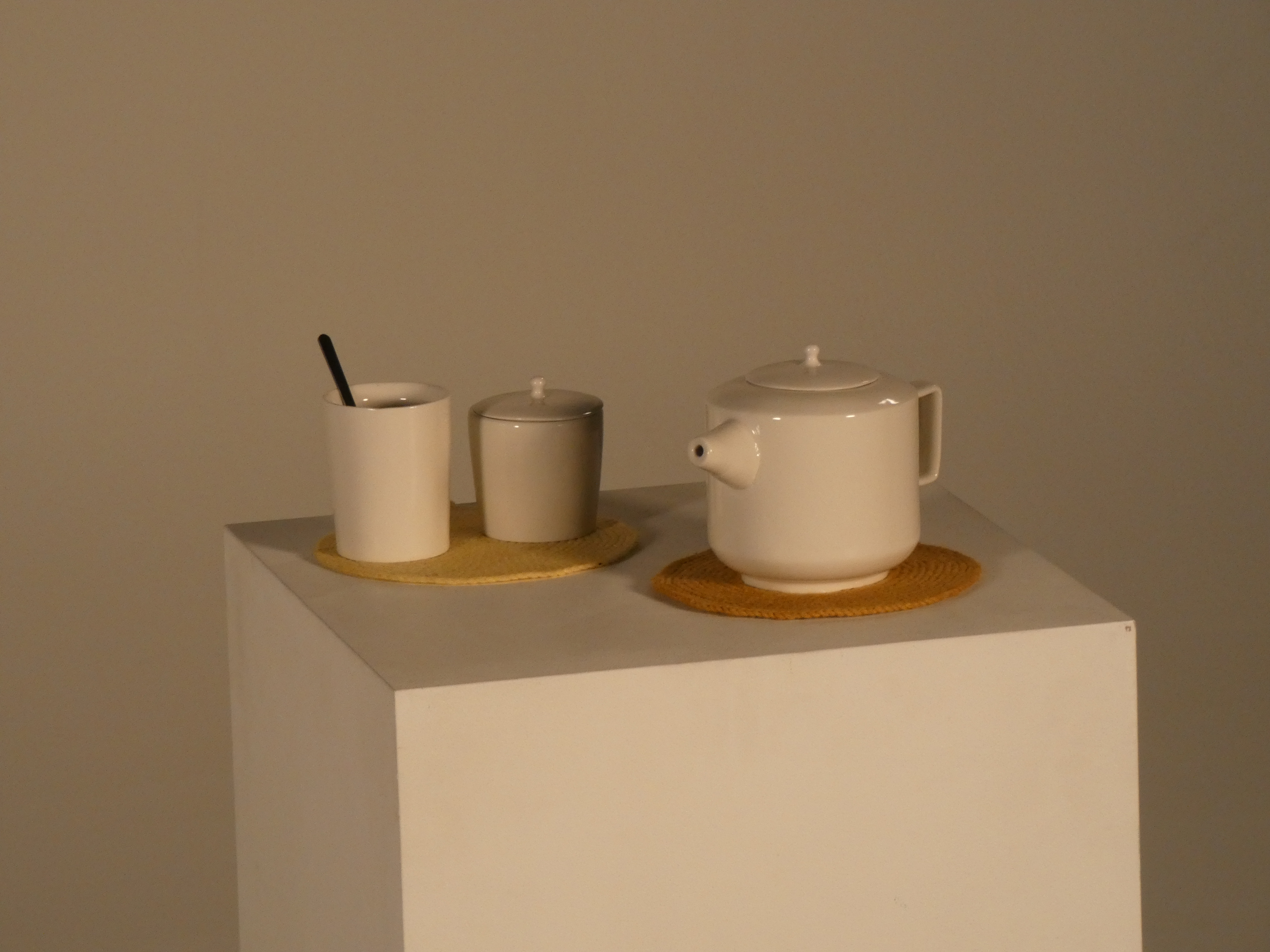
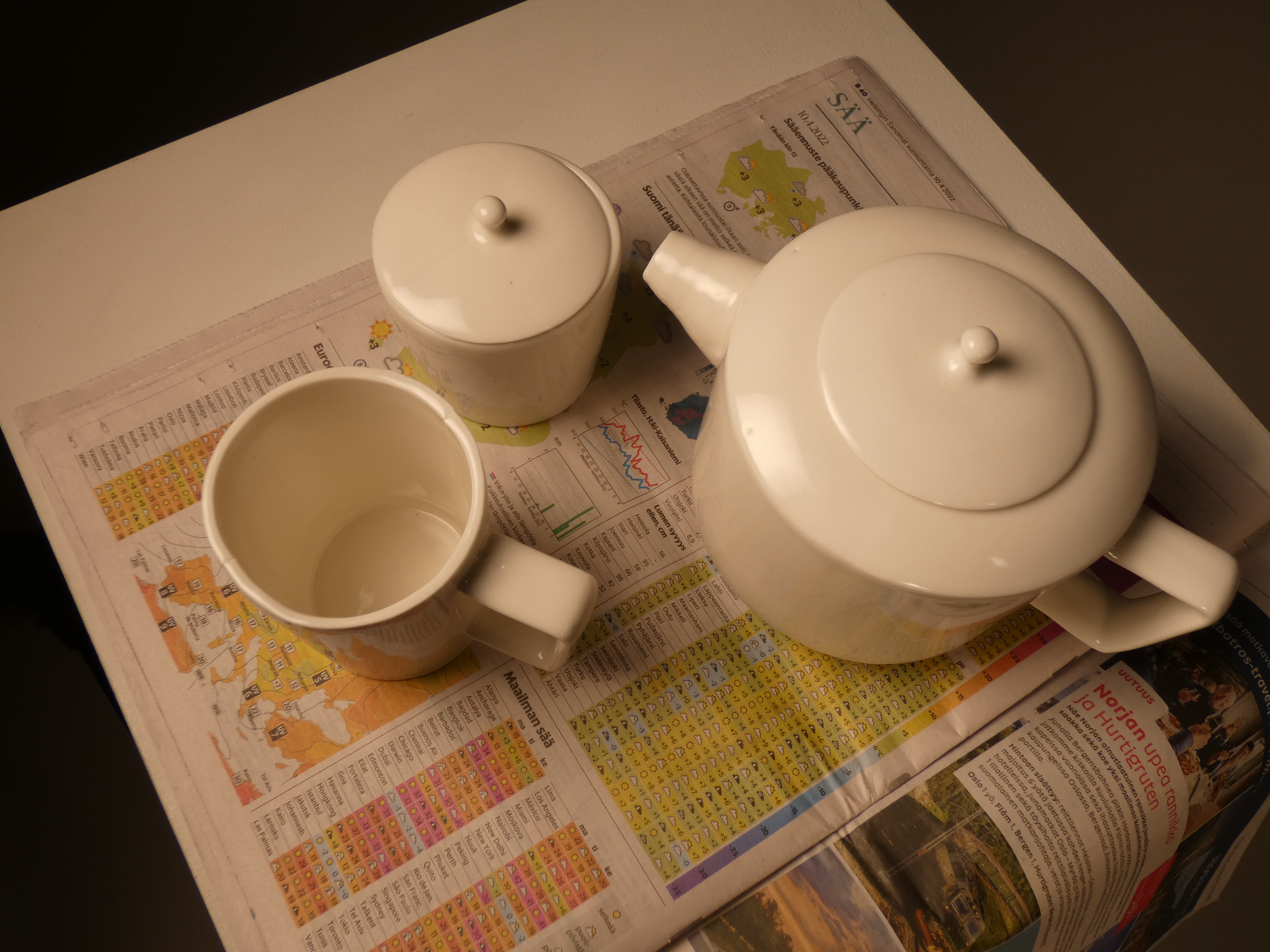
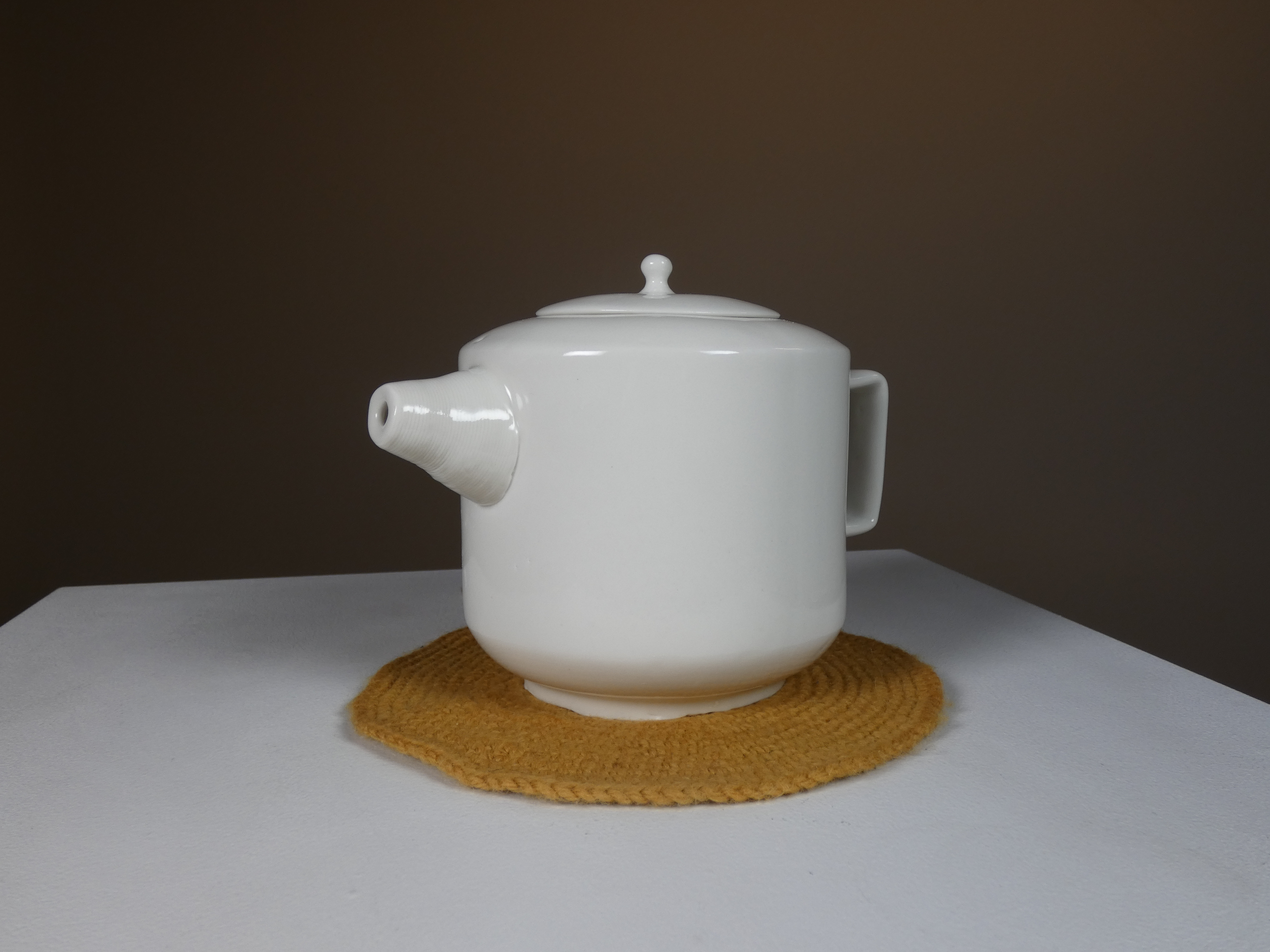
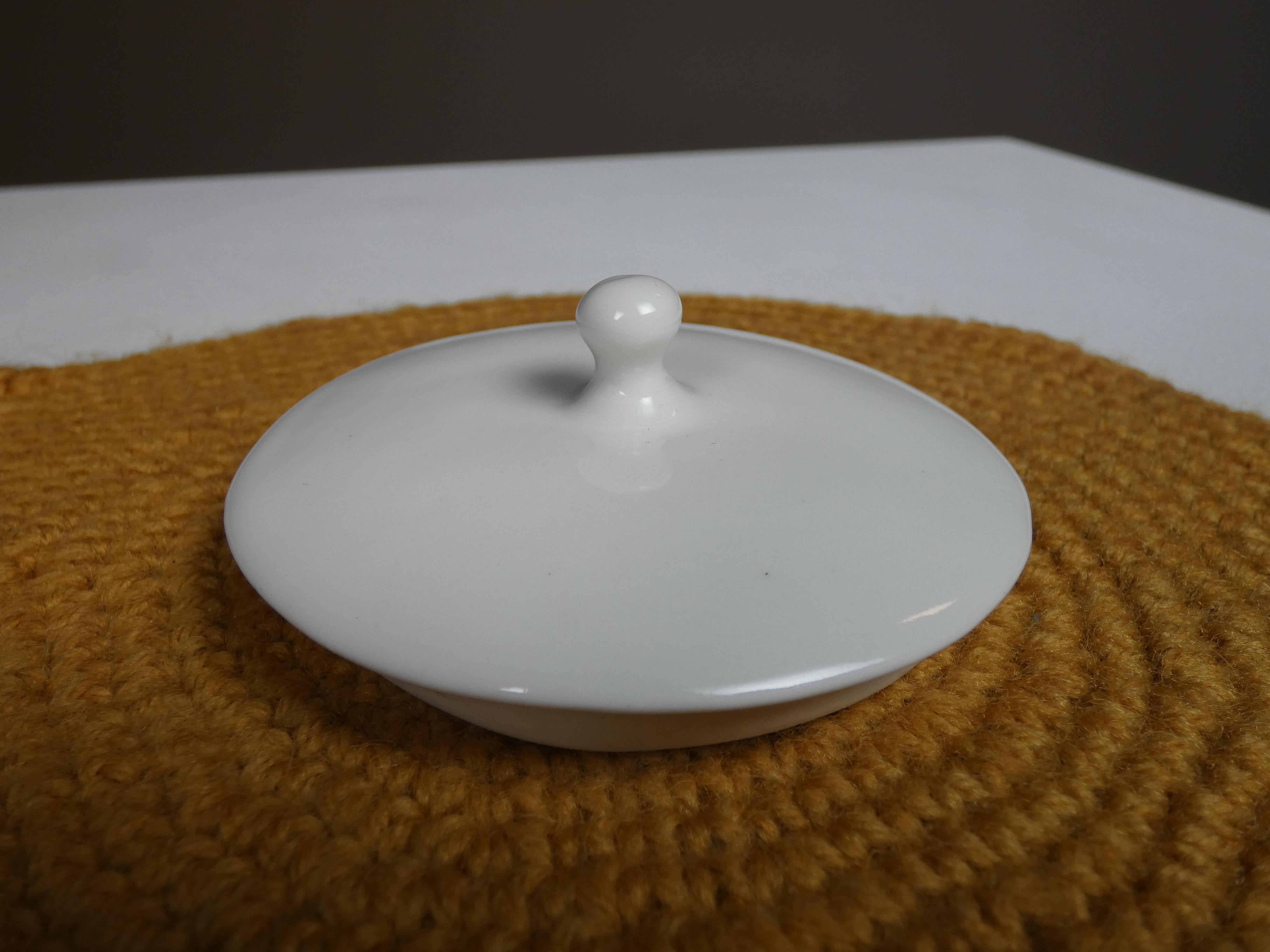
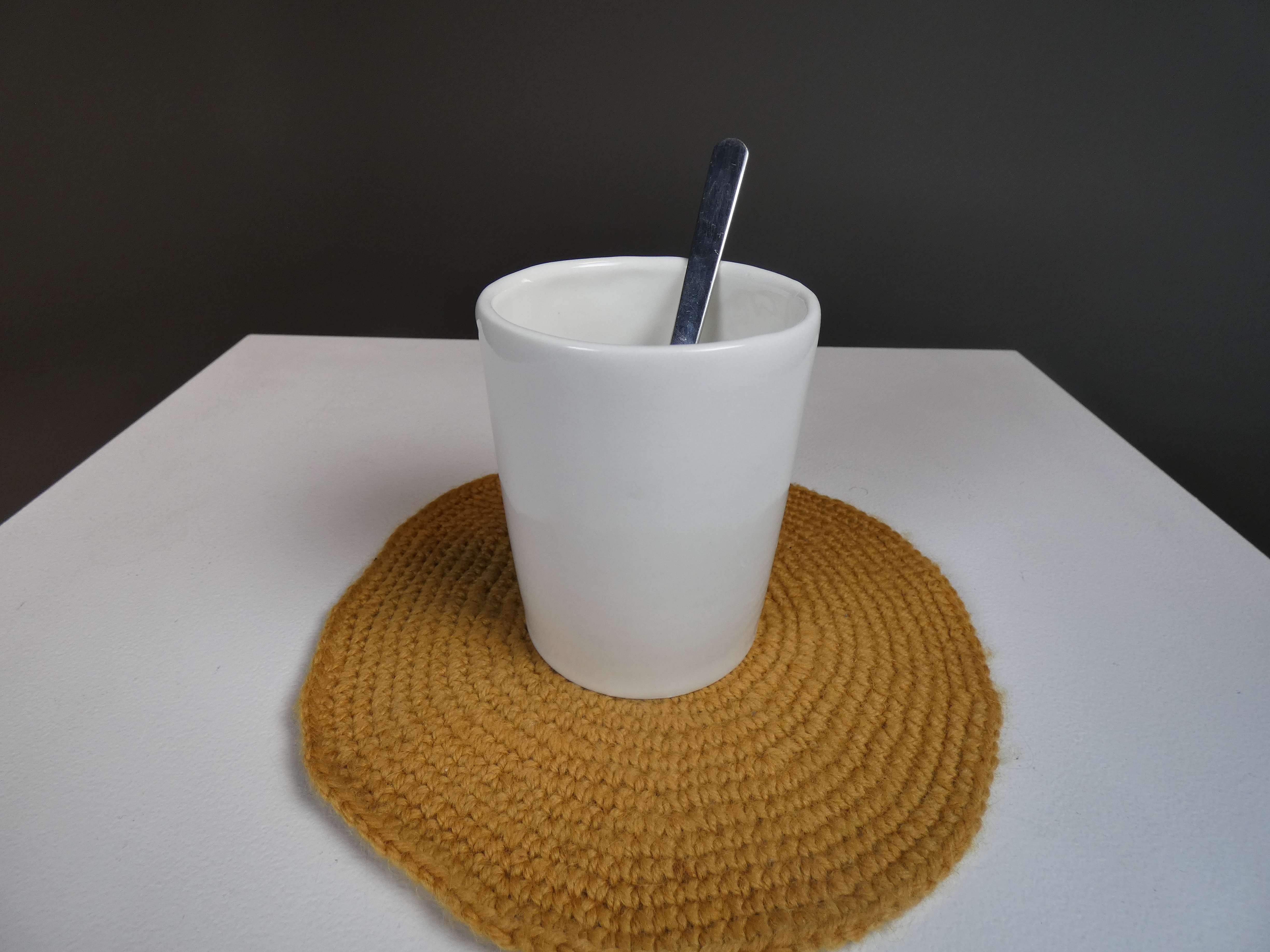
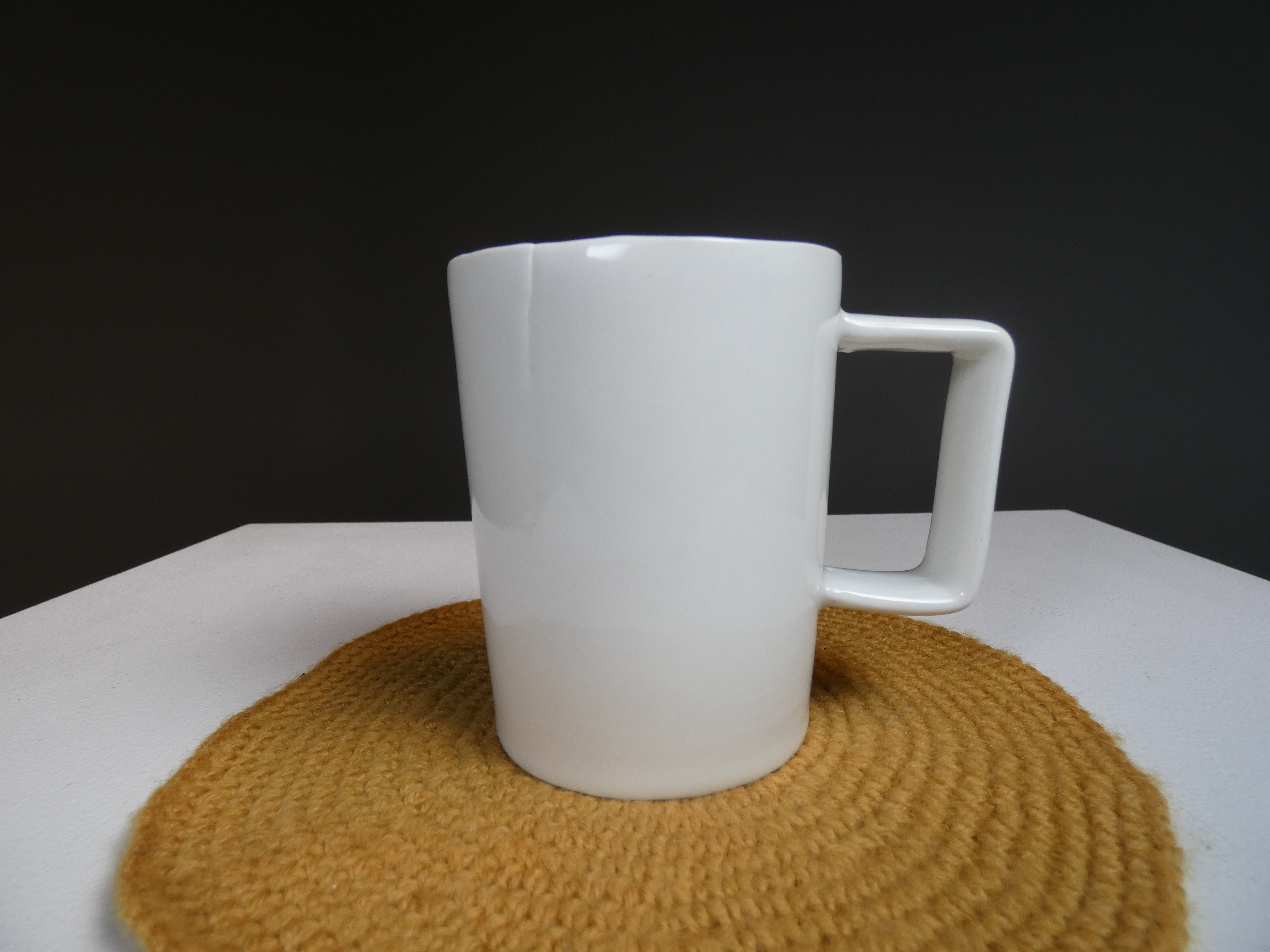
Two finished teapots and three mugs were completed. The teapot successfully achieved my aims of combining both modern and classical production methods.
One improvement was needed, which was the smoothing of the 3D printed spout. The teapots are serving well in my life and in my family home.
Mugs
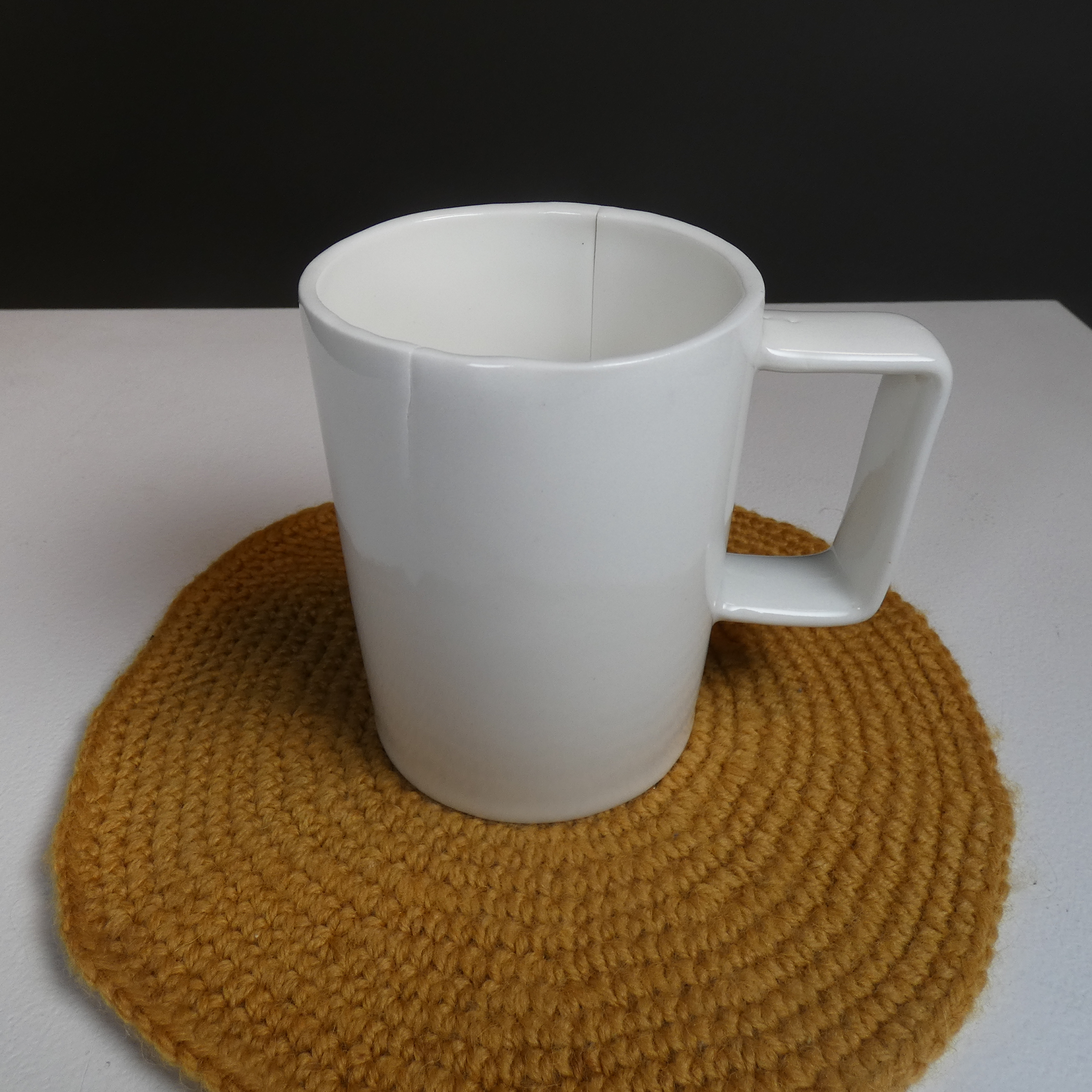
The mugs share the teapot’s straight walls and square handle. Their models were 3D printed and sanded before moulding, then cast, fired and dipped in the same KXX5 glaze. One version carries thicker walls and a small lid to be used with sugar, for example. Due to time constraints, the milk decanter was not produced.
STRATA
TEEKANNU directly influenced the development of the STRATA stackable mugs, designed to sit alongside the teapot as a complete tea set.

Tee, joka tuo meidät yhteen.
The tea that brings us together