STRATA
Stackable Mug Concept
Individual Project | 6 weeks




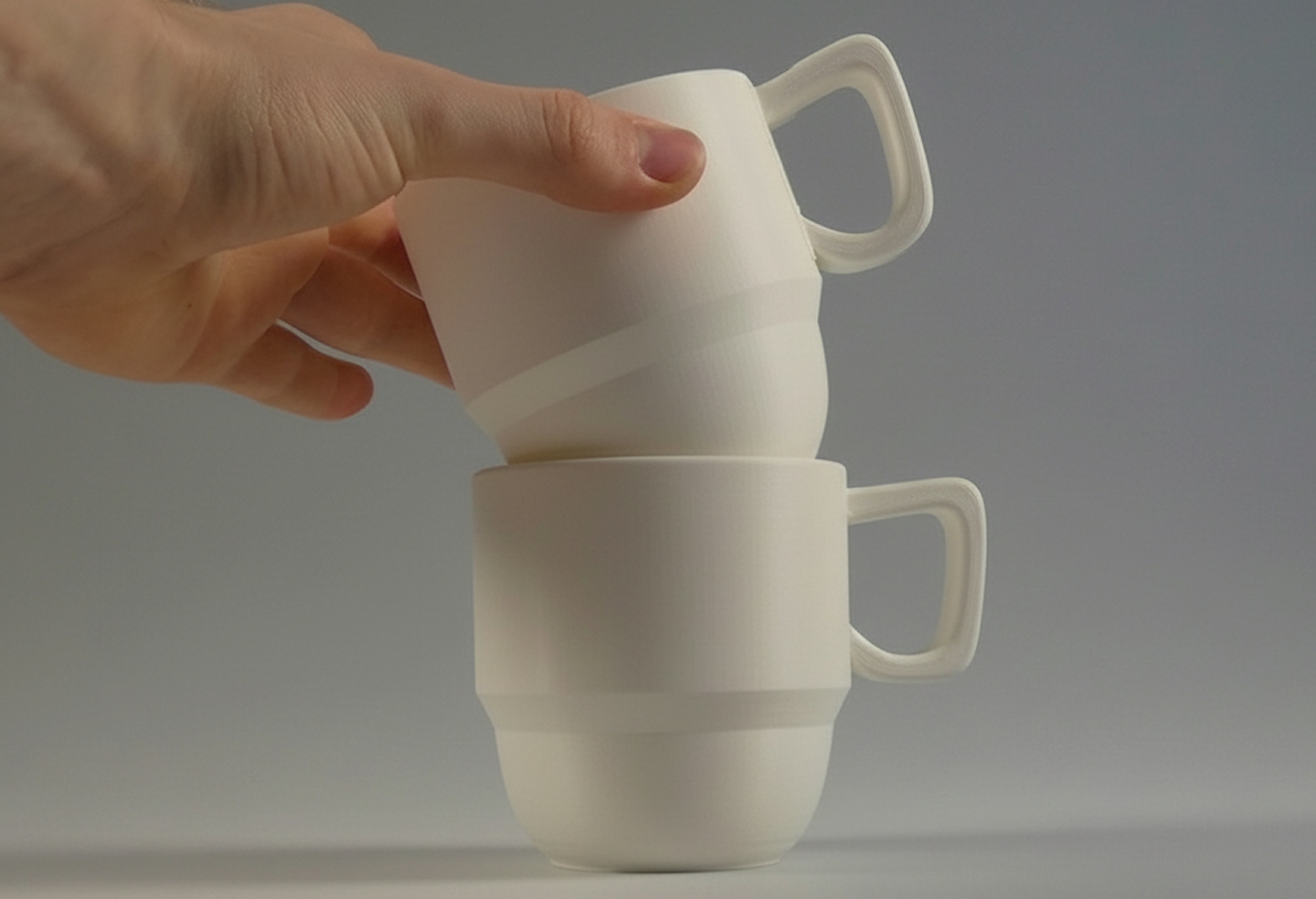
Domestic mugs are often designed as individual objects, with less attention
given to how they store, stack, and sit together in the home.
What is STRATA?
STRATA is a stackable mug concept developed through rapid prototyping and ergonomic testing to balance comfort, compact storage, and a timeless contemporary form. Designed around a 300 ml capacity, it was refined through iterative development for everyday domestic use.
Stackable
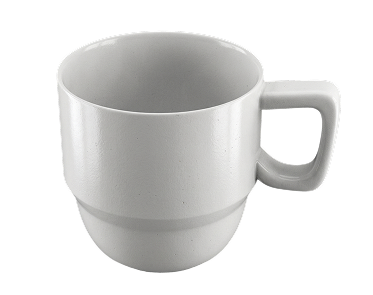
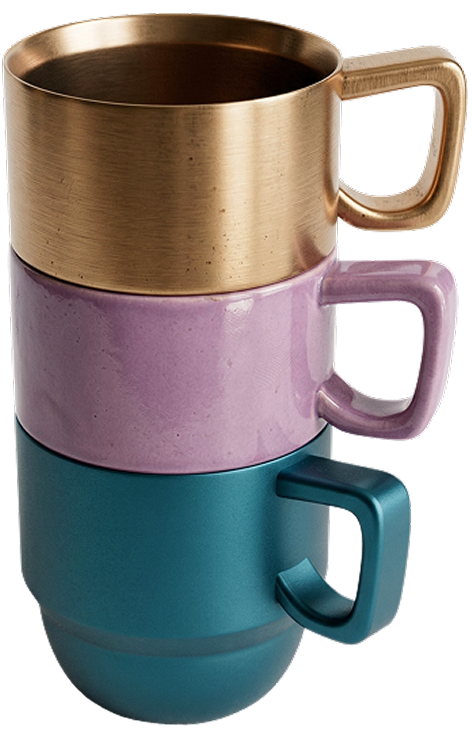
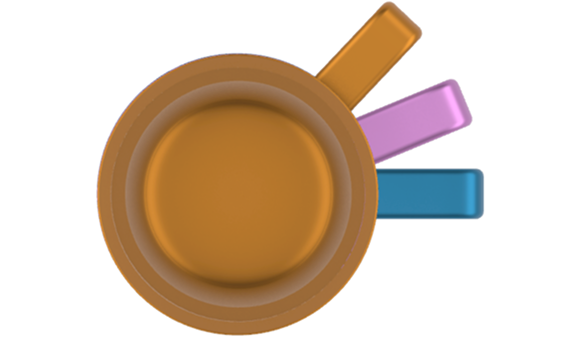
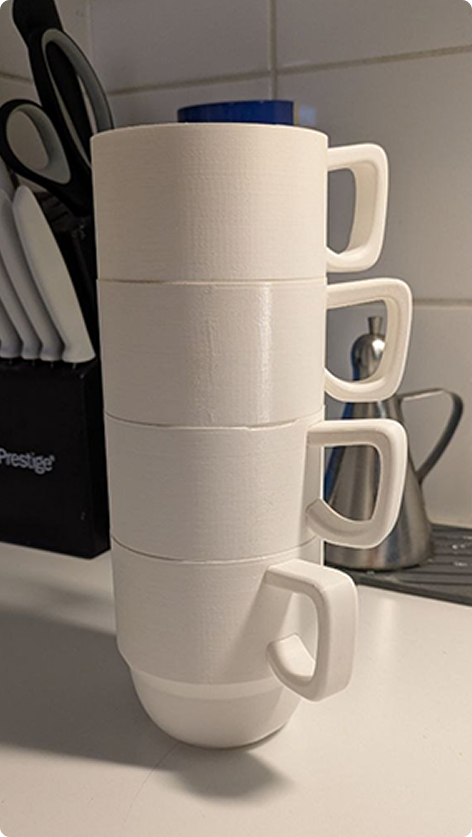
STRATA is designed to stack neatly in multiples, reducing cupboard space while keeping each handle accessible. The stepped lower profile and rounded internal geometry support stable nesting, allowing the mugs to be stored vertically or displayed as a compact set on the kitchen counter.
Refined Through Prototyping
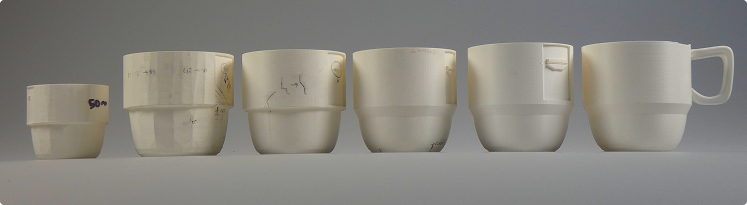
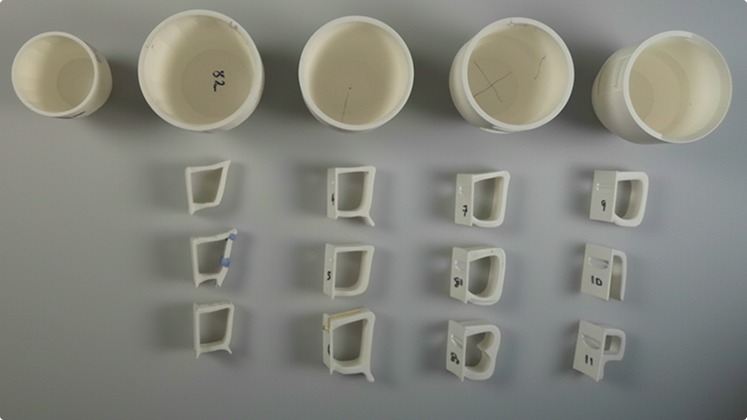
STRATA was refined through Additive Manufacturing physical prototyping and user testing to balance grip comfort, stack height, and storage efficiency. Each iteration tested the relationship between the 300 ml body, handle clearance, lower profile, and nesting geometry.
Mathematically Driven
The stacking geometry was developed through dimensional testing, using the relationship between rim diameter, base diameter, wall height, and handle clearance to define a compact vertical stack. This helped maintain stability, usable grip space, and a consistent 300 ml capacity.
How might we design a compact, stackable 300 ml mug that balances storage efficiency, comfort, and distinctive form through user led ergonomic testing and mathematically refined proportions?
Inspiration
This project was primarily inspired by a visit to Pentik, a Finnish ceramics company based in Posio. Their factory exhibition displayed mugs from almost every country in the world, from Australia to my home country of England, highlighting the cultural variety and everyday familiarity of the mug as an object.
Sketches
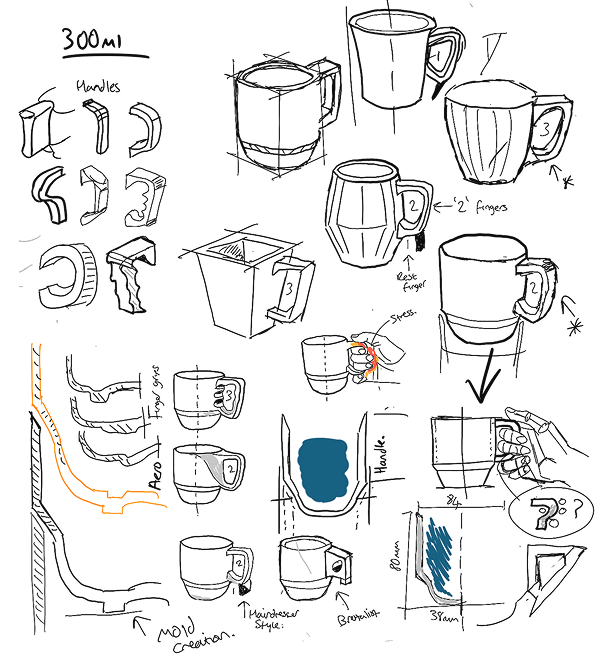
During the trip to Posio, I had already begun sketching ideas and exploring possible forms for the mug. However, the final design was mainly driven by the ergonomic approach, particularly in the development of the handle. For the overall form, I wanted to include a clean face with a subtle external lip, allowing each stacked mug to sit securely on the one below.
Prototyping
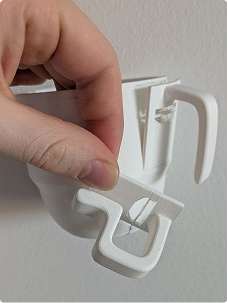
Quick Swap Handle Mechanism
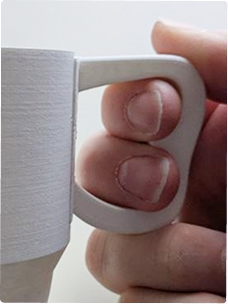
Handle Testing
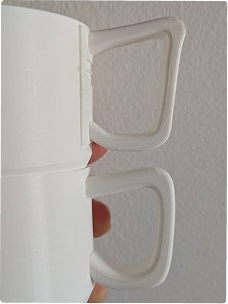
Handle Thickness Evaluation
Ergonomic Testing
Weighted prototypes were used to test how the mug behaved when filled, measuring the relationship between mass, grip position, and wrist pull. This helped refine the handle angle and offset, reducing strain while keeping the handle compact enough for stacking.
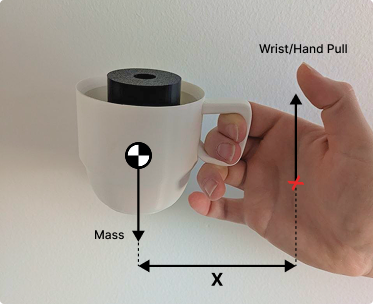
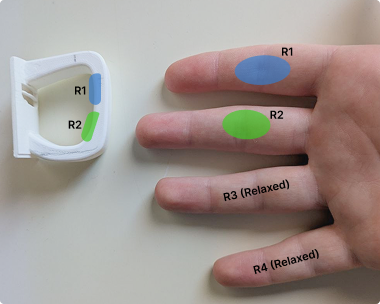
Handle Testing
The handle was refined through user testing to understand finger placement, grip comfort, and wrist position during lifting. Testing focused on the contact points between the fingers and handle, helping define the internal opening, corner radius, and distance from the mug body.
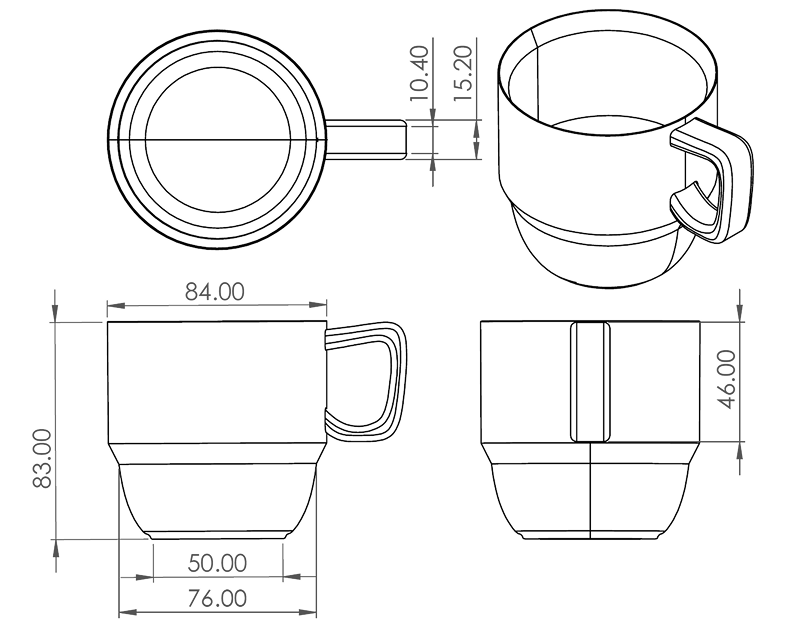
Detailed Design
The final design was produced in Solidworks to be 3D printed to form the moulds for ceramic slip casting.
Production (Coming Soon!)
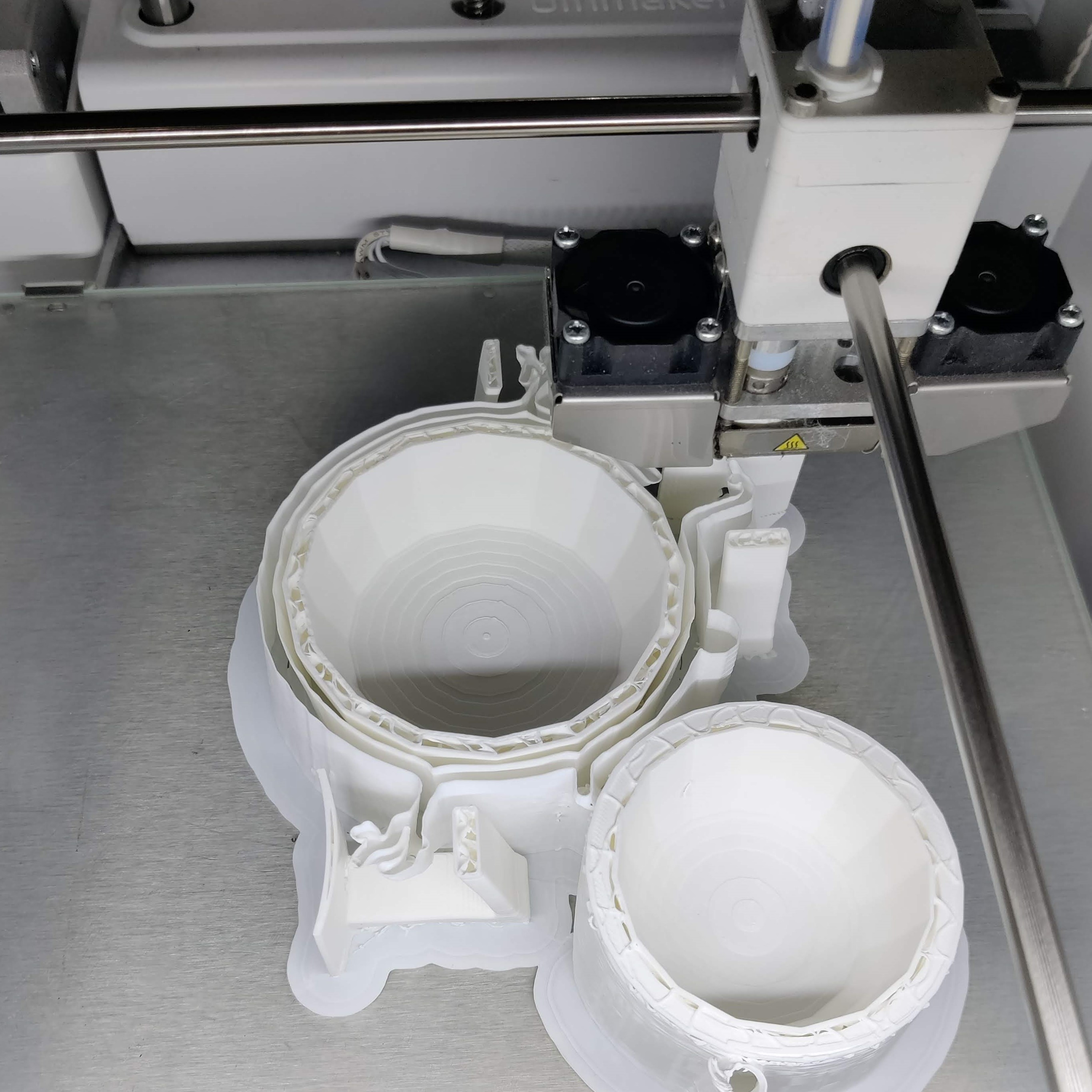
3D Printing Mould Components
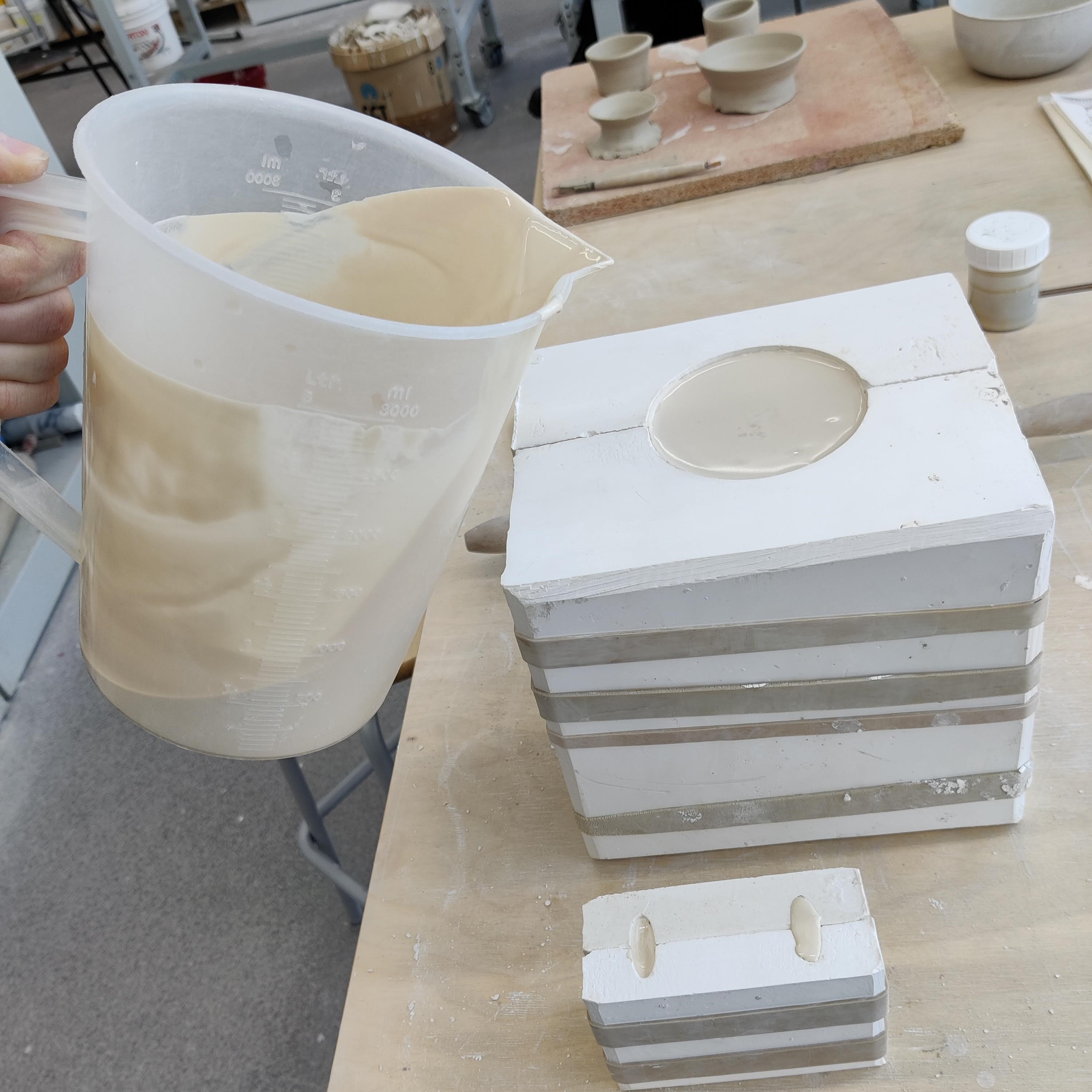
Slip Casting