IBRIDO
A Sustainable Silicone Cartridge
Team Project | 9 Months | 3 Inventors
My role: Intern, Industrial Packaging Designer
Patent Pending: “A re-usable cartridge (Ibrido)” - EPO2025





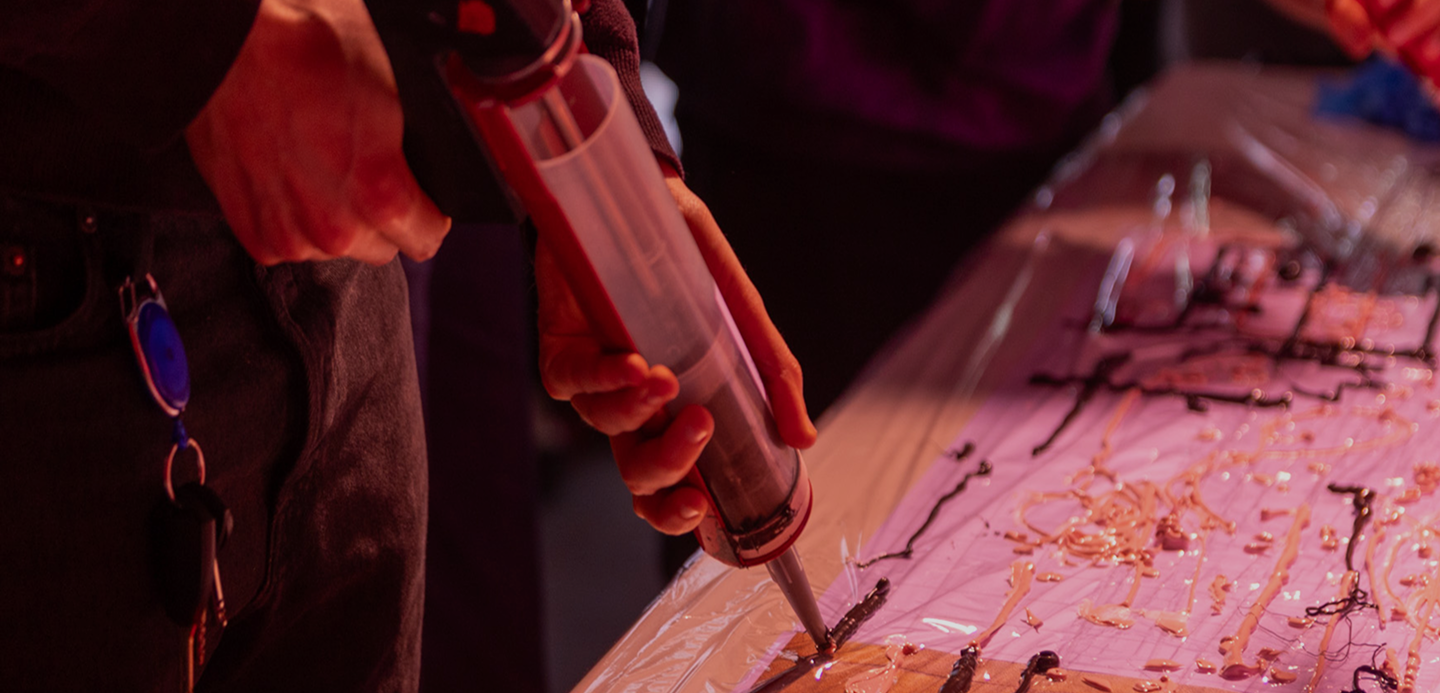
600 Million non-recyclable plastic silicone cartridges go to landfill
every single year, equivalent to 30,000 tonnes.
Brief
The primary goal of the project was to create an innovative, environmentally sustainable, and cost-effective alternative that reduces environmental impact while preserving the quality of the silicone.
The solution aims not only to replace the current packaging but also to establish a new benchmark for sustainable design and application in the silicone industry.
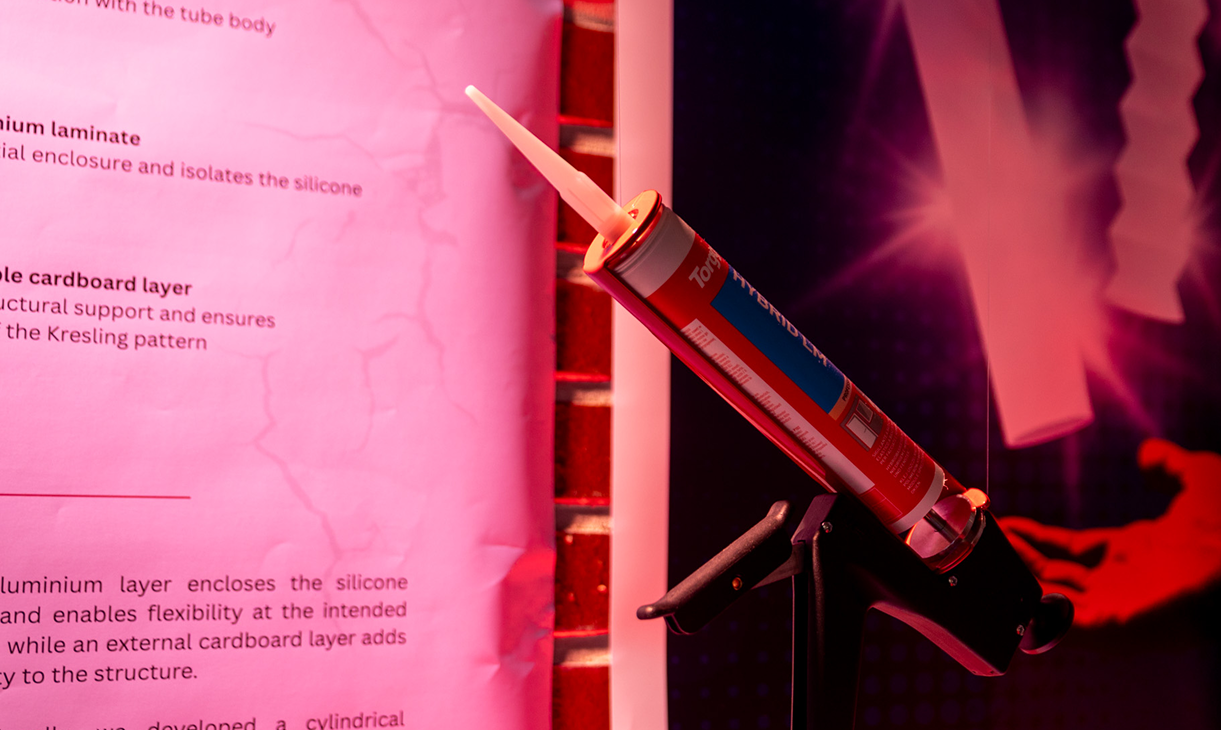
How might we develop a sealant cartridge for the future, meeting upcoming
EU regulations, based within the current infrastructure from the 1960s?
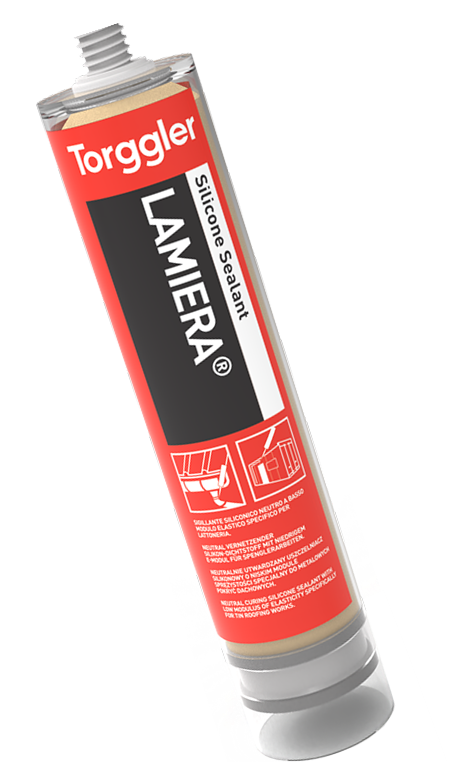
How does IBRIDO work?
The main working principle of Ibrido is to keep the bulk of the packaging material separate from the sealant, essentially separating the package into two parts, an outer shell with great barrier properties to ensure the stability of the sealant inside and an inner layer meant to hold the sealant.
After the package is empty the two parts are able to be separated with the outer shell being completely recyclable and reusable. The inner layer is optimized for minimum mass, greatly decreasing the amount of non recyclable waste created after usage.
Try it for yourself!
Push the plunger forward down the tube to dispense and seperate
EU Regulatory Compliant
#nextgenEU
Ibrido has been developed in accordance with the EU Circular Economy Action Plan, especially for the upcoming EU PPWR and ESPR regulations. Meeting these regulations allows for next generation cartridge status.
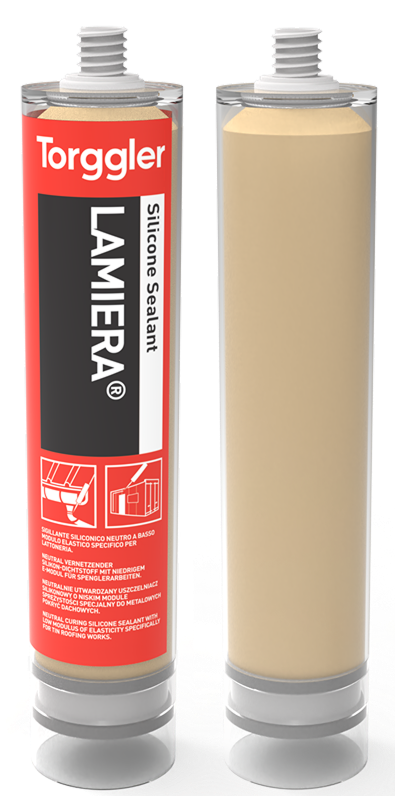
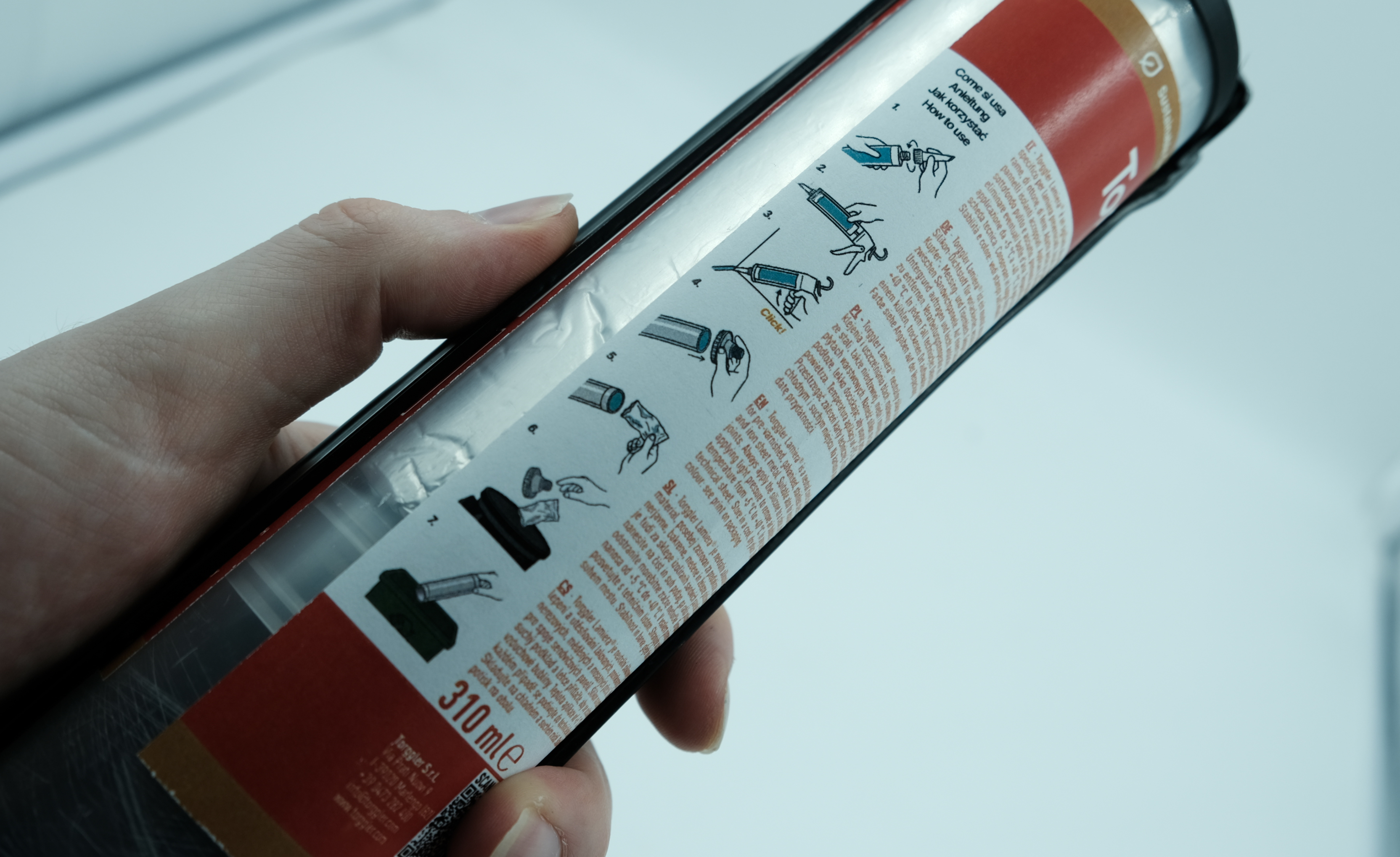
Waste Separation
The top cap of Ibrido had a 74.47% reduction in rHDPE, from 6.11 g to 1.5 g. With the separation of recyclable and non recyclable components, this allows for over 90% of the cartridge to be reused. This is the most radical and recyclable sealant cartridge designed for the EU market.
Detailed Design
In order to be producible, the design was optimised through DfMAD principles.
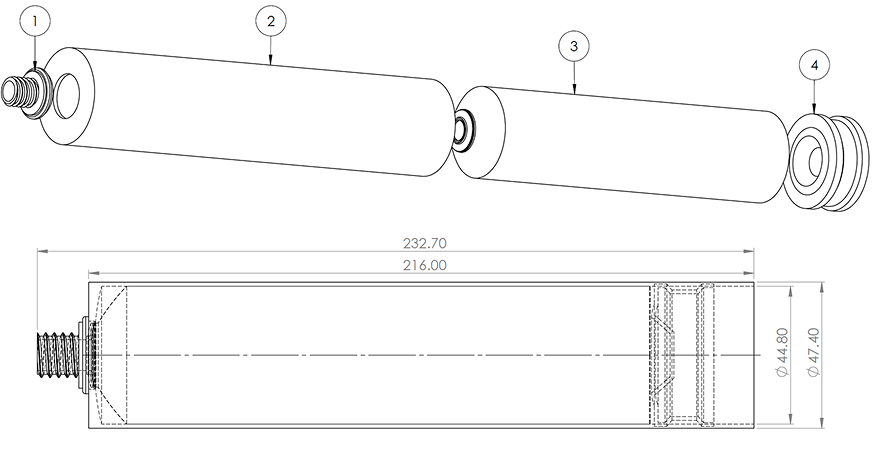
List of Components:
1. Top Cap
2. Cardboard Body
3. Inner Bag
4. Plunger
Development Cycles
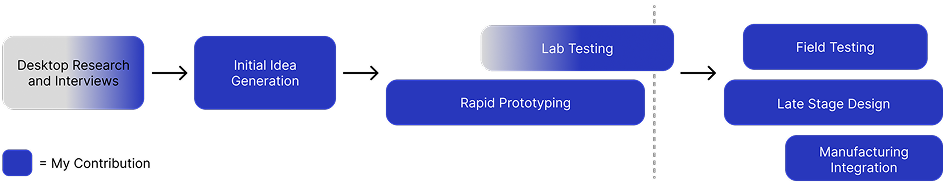
Ibrido was developed in two cycles:
V1. 09/2024-05/2025
Apart of a team of 3 inventors in Aalto University's Product Development Project.
V2. 05/2025-04/2026
Individually working on Ibrido and the late stage design development, also apart of my Master’s Thesis.
Ibrido V1 Main Developments
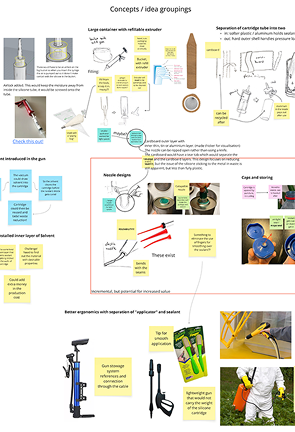
Initial Ideation and Desktop Research
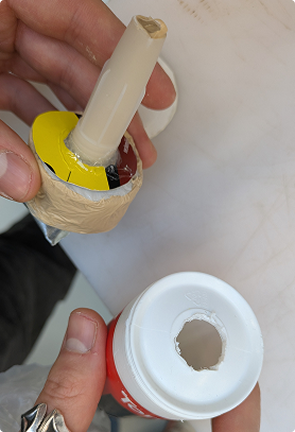
Rapid Prototyping
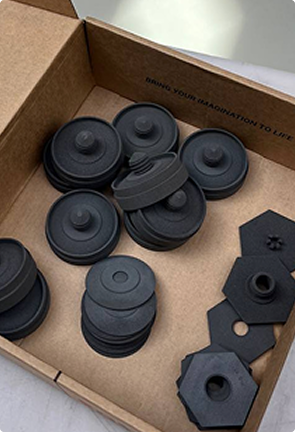
3D & SLS Printing of Components
Ibrido V2 Main Developments
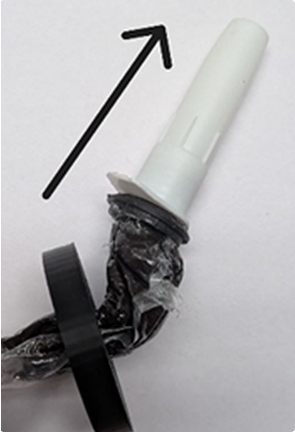
Miniaturisation and Redesign
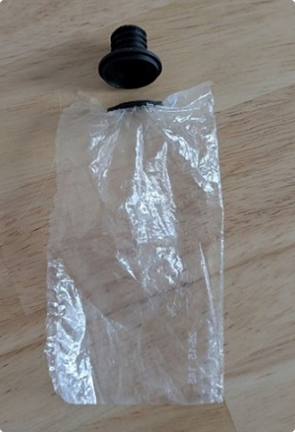
Testing new bag attachment methods
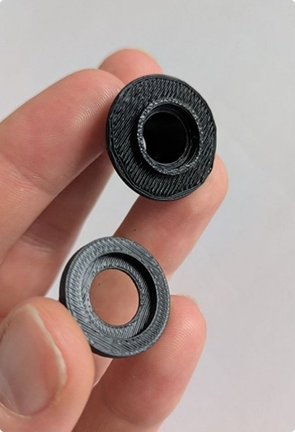
Experimentation with Ultrasonic Welding
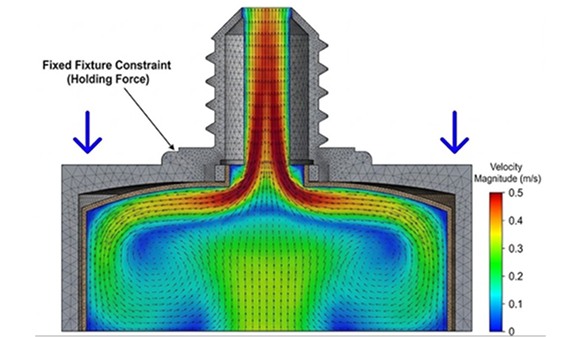
CFD
Computational Fluid Dynamics modelling was used to understand the flow of silicone through the models at different viscosities. This example is of a neutral silicone. This analysis is also not to be used or replicated outside of this study.
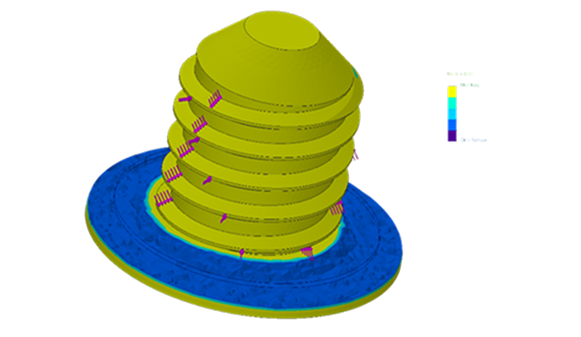
Topological Evaluations
Furthermore, to aid with material reduction, in order to align with the PPWR regulation, a topological evaluation was conducted, allowing for a 4.47% reduction of HDPE from 6.11 g to 1.5 g.
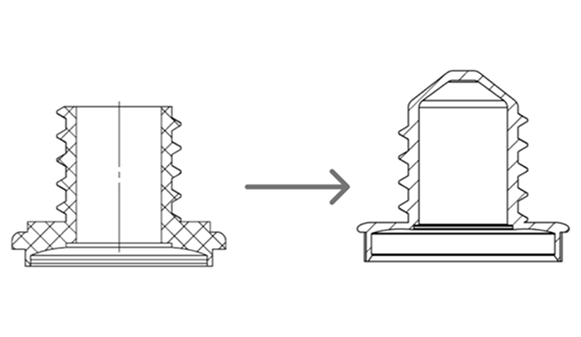
Design for Manufacturing
To finalise the design for production, the design was refined and optimised for injection moulding. You can see the previous pre-injection moulding design and the new design optimised for the production process.
Sustainable Development Goals
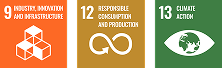
Ibrido aligns with EU regulations and also contributes to three UN Sustainable Development Goals: 9, 12 and 13.
Master’s Thesis
As part of my role at Torggler, I worked as a researcher, developing the Ibrido cartridge through Design for Manufacturing, Disassembly and Recycling, utilising Technology Readiness Levels as a development structure.